Policy News
IPIFF participates in FAO’s private-sector webinar on agrifood systems
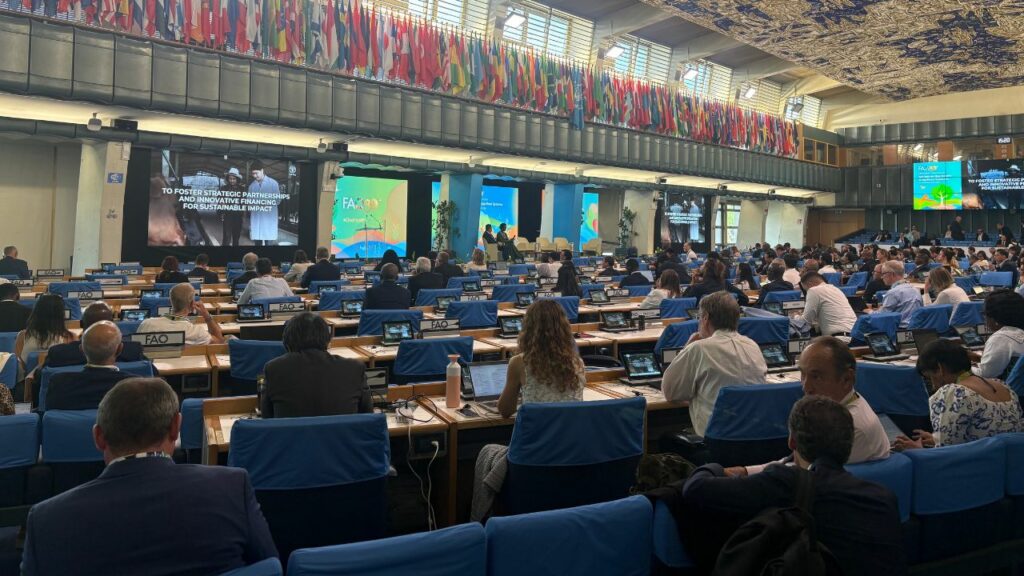
IPIFF Secretary-General, Steven Barbosa, participated as a speaker in FAO’s private-sector webinar “Let’s talk with the private sector: The role of livestock in agrifood systems and beyond”, held on 16 April 2026 — one week after IPIFF submitted its Position Paper on the EU Livestock Strategy.
The event showcased FAO’s science- and evidence-based global assessment of livestock’s contribution to food security, sustainable agrifood systems, nutrition, and healthy diets. IPIFF Secretary General Steven Barbosa joined diverse perspectives from leading organisations to highlight the sector’s key contributions:
IPIFF’s participation focused on:
- Insects as sustainable protein for food and feed
- Driving the circular bioeconomy
- Supporting responsible farming practices and policy-informing science
FEAP and IPIFF issue joint call to EU institutions
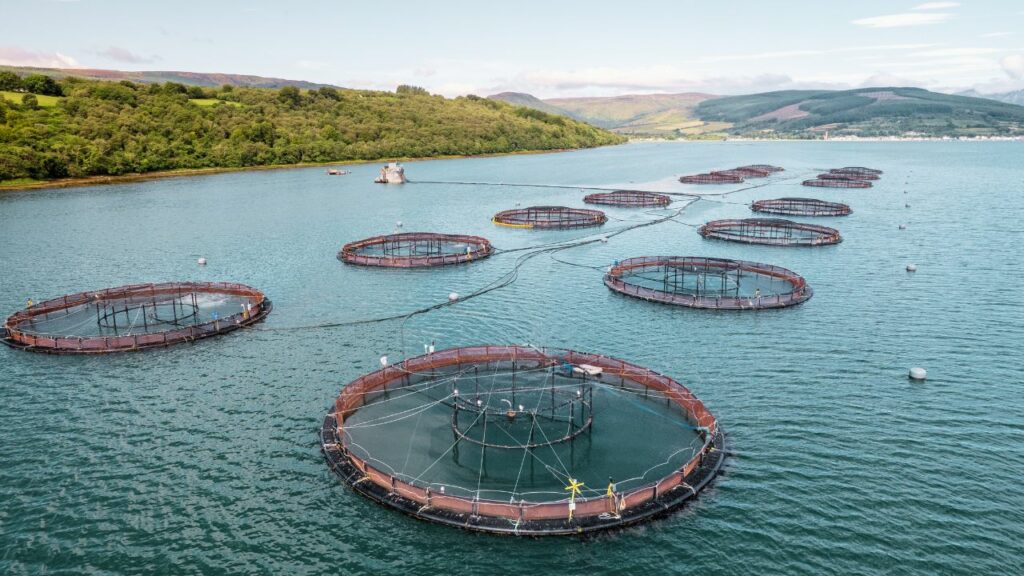
Geopolitical instability, trade uncertainty, and climate pressures are reshaping the feed value chain. To keep fish thriving and farming sustainable, the Federation of European Aquaculture Producers (FEAP) and IPIFF are calling on the European Commission, Parliament, and Member States to act now.
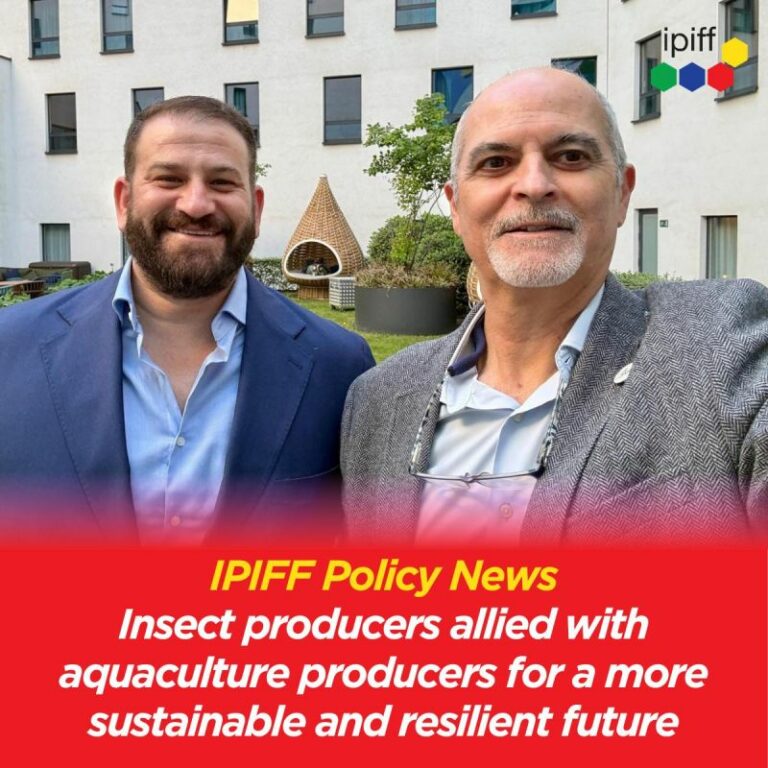
Following a meeting between IPIFF Secretary-General Steven Barbosa and FEAP Secretary-General Javier Ojeda, the two organisations stand united in urging EU institutions to advance a more inclusive, competitive, and sustainable EU aquaculture sector. Their joint call focuses on:
Joint demands to EU institutions:
- Expand access to sustainable aquafeed sources like insect meal
- Create incentives to lower costs for aquaculture producers who cannot rely on existing feeds
- aloneAlign measures with the EU Vision for Fisheries and Aquaculture
IPIFF and BIC advance Europe’s circular bioeconomy
In a time of geopolitical instability, resilience is a strategic imperative. IPIFF and the Bio-based Industries Consortium (BIC) are driving forward Europe’s circular bioeconomy, demonstrating that sustainability and competitiveness go hand in hand.
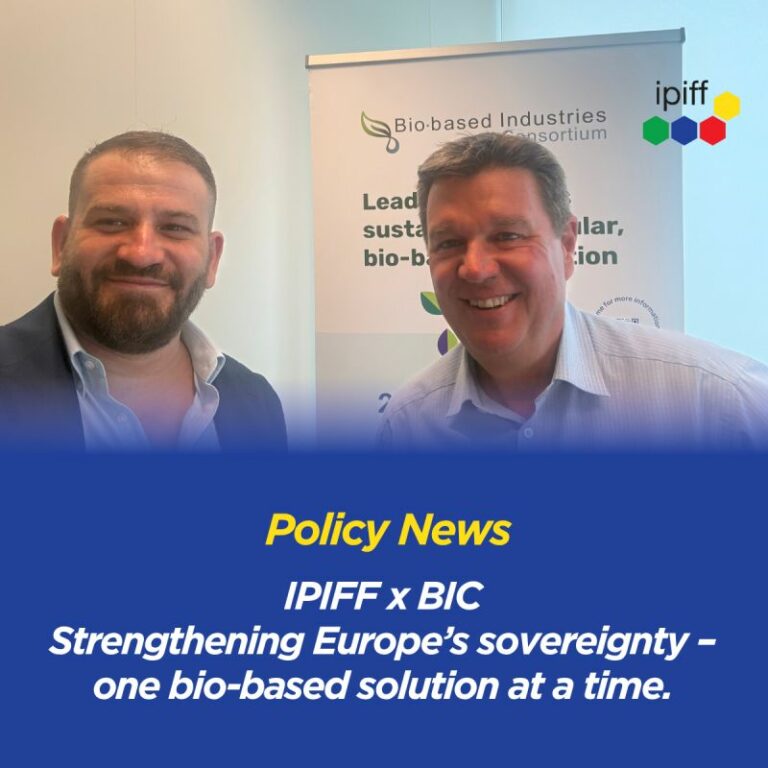
As Steven Barbosa (IPIFF Secretary-General) and Philippe Mengal (BIC Executive Director) stated: “As the EU shapes its next Framework Programme and Biotech Act, bio-based sectors are ready to deliver.” Their collaboration centres on:
Key areas of joint action:
- Reducing EU dependency on fossil-based imports through bio-based alternatives
- Creating local value chains via insect farming and upcycling of low-grade side streams
- Supporting EU leadership in biomanufacturing and strategic autonomy
The European Investment Bank’s report on scaling up Europe’s bio-based industries spotlights insects as a prime example of “novelty and premium creation” — high value, niche applications, and meaningful market potential, provided the right financing and policy levers are in place.
The report builds on the European Environment Agency’s assessment on bio-based waste circularity, where insects were also highlighted. To accelerate insect-sector scale-up, the report points to a range of measures:
Recommended policy and funding levers:
- Expand ECB-type funding to back insect ventures
- Enable EIB venture debt under InvestEU (Green Transition) to bridge pilots to large-scale plants
- Leverage CBE JU flagship calls to build a robust insect project pipeline
- Introduce EU-wide demand-pull mechanisms such as contracts for difference or targeted quotas
- Expand EU taxonomy guidance to classify insect-based activities as green finance-worthy
Organizational Work
Task Force on Communication
PIFF’s Communications Task Force has expanded the organization’s media footprint and global reach, strengthening policy relevance and cross-border collaboration. From January to April 2026, coverage includes multiple pieces urging policy action to boost insect meal adoption in aquafeed, with additional visibility across industry outlets and partnership announcements.
The alliance network now includes UKEIA and CFNA, while Biomar, Argenta, and DLG have joined as Strategic Advisory Members. The EU insect segment will be highlighted at EuroTier events in Hannover and Hamburg, underscoring policy dialogue and sector visibility, with further media partnerships in the pipeline to broaden international engagement.
On the policy and tools side, the final LCA Concept Note provides a robust, evidence-based foundation for environmental assessment in insect production.
The EU Aquaculture package advances with targets of 3% insect meal by 2027, 15% by 2030, and 50% by 2050, complemented by a supporting Scientific Bibliography.

Additional position papers cover the EU Strategy for Coastal Communities, CAP, organic regulation, and the bioeconomy, while the 2026 Industry Survey has been relaunched with participation from 50+ UK Edible Insect Association members.
Internal communication flows continue via the bi-weekly Insider Digest, a website revamp is slated for May 2026, and the European Parliament-hosted Annual Event will feature strong policy engagement and industry collaboration. A crisis-management program is also in place, prioritizing a positive, evidence-based narrative and a member-facing toolkit to respond to media inquiries.
This Report includes:
- Media Outreach – Building visibility and influence
- Market Positioning & Global Outreach – Partnerships that strengthen the sector
- Publications & Policy Tools – Grounded, evidence-based resources
- Internal Communications & Newsletters
- Website Revamp & Rebranding of IPIFF Events – Modernizing for impactCrisis Communication
- Management – Proactive, positive, and evidence-based
➡️ Please access the IPIFF Task Force on Communication, here.
TASK FORCE ON LCA- A Collaborative Milestone
After a decade of industrialisation, the insect production sector now stands at a pivotal juncture. With industrial-scale facilities operating globally and multi-year operational data available, the industry is increasingly able to ground LCA discussions in real production performance rather than lab-scale data.
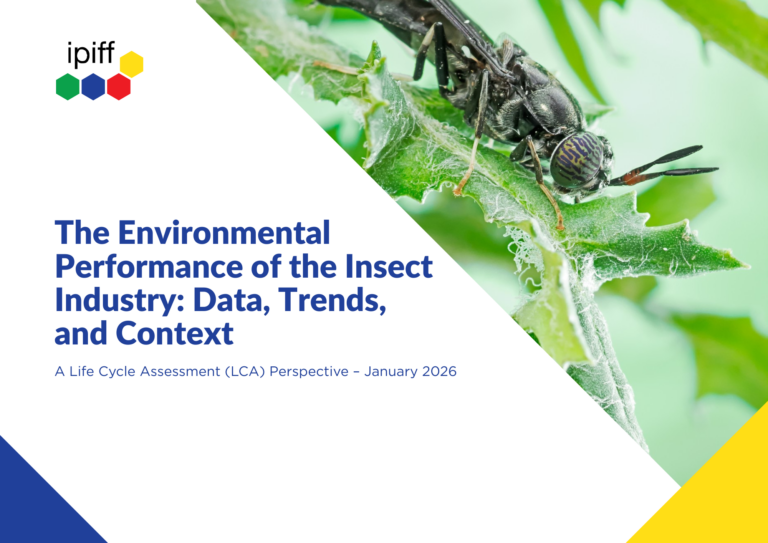
Nevertheless, as with most agro-industrial sectors, establishing a single LCA that represents the insect industry as a whole remains inherently challenging. Environmental outcomes can vary considerably depending on factors such as insect species, production technologies, feedstock, energy sources, and scale.
This document is organized into three sections:
- The first section revisits the scientific rationale driving the growing interest in insect-derived nutrients and explores the potential role of insects in future food and feed systems.
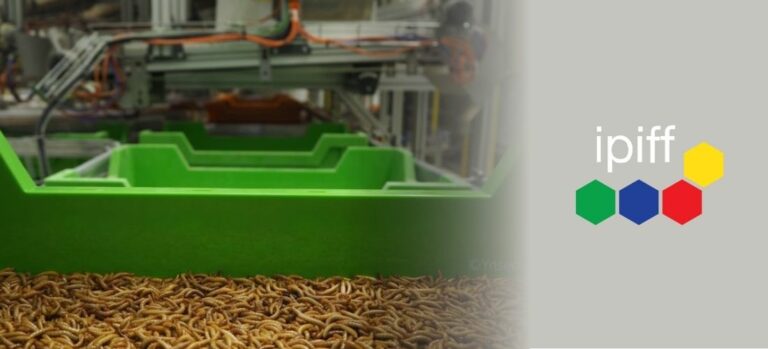
- The second provides an up-to-date assessment of environmental performance across different production models, based on multi-year operational data from industrial-scale facilities.
- The third examines key methodological considerations for developing a more consistent industry-wide life cycle assessment (LCA) framework and outlines the essential steps to enhance comparability and transparency across the sector
In this issue, we highlight the work behind IPIFF LCA Concept Note and why it stands to move the industry forward. Over the past several months, IPIFF has coordinated a cross-disciplinary effort to translate decades of hands-on experience into a practical, implementable framework. The project brought together regulators, practitioners, researchers, and technology providers, all united by a common objective: to reduce fragmentation, improve interoperability, and accelerate the safe adoption of innovative approaches across the sector.
Collaboration has been the cornerstone of this effort. The contributors bridged disciplines and geographies, lending expertise in safety, quality, data governance, sustainability, and technology integration. The work has been validated through pilot demonstrations, independent reviews, and stakeholder consultations, all of which helped to sharpen the guidance and confirm its applicability across diverse contexts. The document’s strength lies not only in its content but in the process that produced it—a commitment to openness, shared responsibility, and continuous improvement that the industry can rely on as a foundation for collective progress.
Finally, this document is accompanied by seven third-party-assessed LCAs from IPIFF member companies, as well as a comprehensive scientific bibliography. Together, they help clarify the key contextual factors needed to accurately interpret the industry’s rapidly improving environmental profile and its future potential.
Why is this Important?
This is a strong political lever for IPIFF to engage with key policymakers.
- European Commissioner on the Bioeconomy Strategy
- European Commissioner on Research, Innovation and Start-up and Scale-up
- European Commissioner on Agriculture & Food
- European Commissioner on Fisheries and Ocean
➡️ Read the IPIFF LCA Concept Note, here.
Task Force on Boarder Control-Update
The IPIFF Secretariat has received multiple reports from members regarding the presence of non-compliant insect products circulating on the EU market.

Evidence collected from several Member States—including Spain, France, the Netherlands, and Bulgaria—confirms the presence of such products.
Proposed Actions
In response, IPIFF intends to formally notify relevant European Commission services to call for stricter implementation of the Official Controls Regulation.
At the same time and building on IPIFF’s recent cooperation with the Chinese Chamber of Commerce and the Insect Chinese Association, we are pursuing a parallel collaborative approach. This initiative aims to foster closer ties between EU operators and Chinese producers seeking approval to export to the EU.
Through these dual efforts, we seek to create a transparent framework where IPIFF members are informed about which EU operators are importing Chinese insect products. Our goal is to work collectively with these operators, alongside Chinese and European authorities, to ensure full compliance with applicable EU legislation.
Following our online meeting on the 10th of March with representatives of the European Commission, we are writing to provide a clear update on the action points discussed and to outline the next crucial steps in safeguarding our industry’s integrity.
A new internal meeting was held with representatives of Insect companies who have compiled evidence of the existence of non-compliant insect products.
The Mission of the Task Force
This initiative brings together IPIFF members who have been compiling evidence of non-compliant insect products and submission of complaints to the respective national authorities.
IPIFF is to broaden the collection of evidence, by reaching out to other IPIFF Members and to enlarge the list of complaints submitted by insect operators to their respective national authorities.
Step 1: Compiled Evidence (Led by IPIFF Members)
Members already presented and compiled evidence such as a list of existing non-compliant products, companies and testimonies, or reporting of the lack of proper boarder control checks.
➡️ Access the compiled evidence, here and also here.
Step 2: Report to National Authorities (Led by National Associations)
Different members have also addressed their national competent authorities, calling their attention for the need of enforcement of proper boarder checks and ensure compliance with applicable legislation.
Step 3: Escalate to the European Commission (Led by IPIFF)
IPIFF has a Supporting Document serving as a guide to support members in compiling evidence and to report to their respective national authorities. This, to broaden the number of evidence and number of complaints submitted by insect operators in different EU Member States, which will enable IPIFF to take action at the EU level.
Task Force on Novel Foods-update
Following the meeting of the Task Force on Novel Foods, IPIFF proactive stance towards European Parliament, Member States and by formally addressing the Commissioner on Health and Animal Welfare on the unlawful delay on the approval of the insect Novel Food Application, without a formal response on behalf of the Commissioner’s cabinet, IPIFF escalated by addressing the cabinet of the President of the European Commission.
To recall that in April 2025 IPIFF was able to influence the European Parliament Committee on Environment and Food Safety to vote against a Motion objecting the approval of the Italian Cricket Farm Novel Food application.
During the course of this week, the Commissioner on Health and Animal Welfare finally responded to the several requests by IPIFF, informing that the procedure is not completed and soon to expect the draft Commission Implementing Act authorizing the placing on the market of Acheta Domesticus to be discussed with the Member States.
➡️ Read the response of the Commissioner’s cabinet, here.
Shape the Future of the European Insect Sector: Participate in the Critical 2025 IPIFF Industry Survey!
The European insect sector is no longer an emerging concept—we are in the midst of a rapid upscaling and commercial consolidation phase. Our progress is being watched by investors, policymakers, and value chain partners across the globe. To ensure our collective voice is heard clearly and backed by the most compelling evidence, we must speak with one voice, supported by the most current and robust data.
This is why the IPIFF Secretariat is thrilled to announce the relaunch of our flagship Industry Data Survey, now supercharged by the participation of the 50+ member companies of the UK Edible Insect Association. This unprecedented collaboration marks a significant step forward in the representativeness and impact of our advocacy work.
Why Your Participation Matters Now More Than Ever
The information you provide will be the bedrock of our upcoming advocacy toolkit, designed to support your business and the entire sector.
We are updating our core communication materials to reflect the reality of the market in 2025, 2026, and beyond. By contributing, you are directly shaping:
- The Updated Feed Market Factsheet: We need precise figures on the quantities of insect-based feed products commercialized in the EU in 2024 and 2025, along with your forecasts for 2026 and 2030. This data is critical to demonstrate our sector’s growth trajectory and potential to replace conventional proteins.
- The ‘IPIFF 2030’ Brochure (Updated Edition): Originally published in November 2023, this flagship document is being refreshed with your input. We will update key indicators such as:
- Total investments generated by the sector.
- The pace of new production plant construction.
- Job creation figures.
- The main drivers of success in our industry.
This updated brochure, scheduled for publication in May 2025, will be an indispensable tool for your own outreach to investors, commercial prospects, and media.
Your Input is the Final Ingredient
The IPIFF Secretariat is working diligently to consolidate this information to produce the new materials by May 2025. To meet this ambitious deadline, we need your response by the 30th of April.
➡️ PARTICIPATE IN THE SURVEY NOW
EVENTS
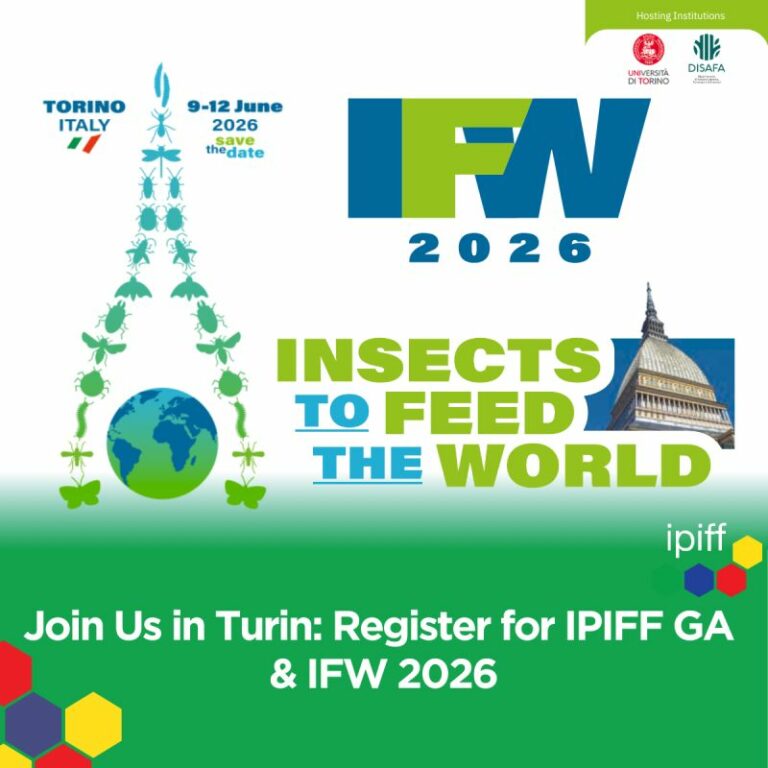
Join Us in Turin: IPIFF GA & IFW 2026
Two unmissable moments for the global insect sector — same city, same week
The insect industry community convenes in Turin in June 2026 for two back-to-back events. IPIFF members are invited to the General Assembly on 8 June, with registration closing 15 May 2026. Open to all, the Insects to Feed the World (IFW) 2026 Conference runs 9–12 June — the leading international conference for researchers, industry leaders, policymakers, and innovators.
Key dates:
15 May 2026 — IPIFF GA registration closes
22 May 2026 — IFW early bird rate for members ends
8 June 2026 — IPIFF General Assembly, Turin
9–12 June 2026 — IFW Conference, Turin
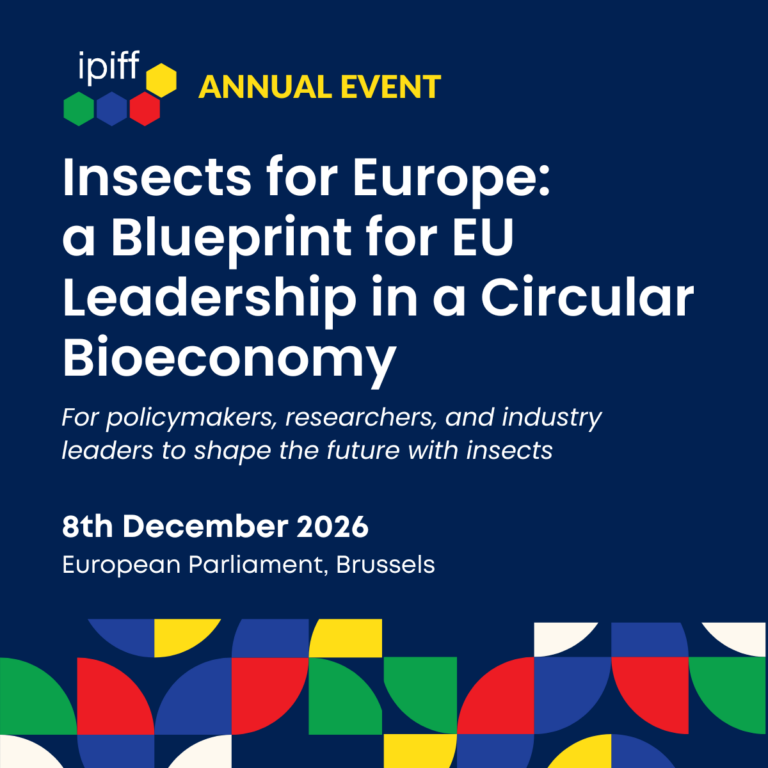
IPIFF Annual Event- Registrations now open!
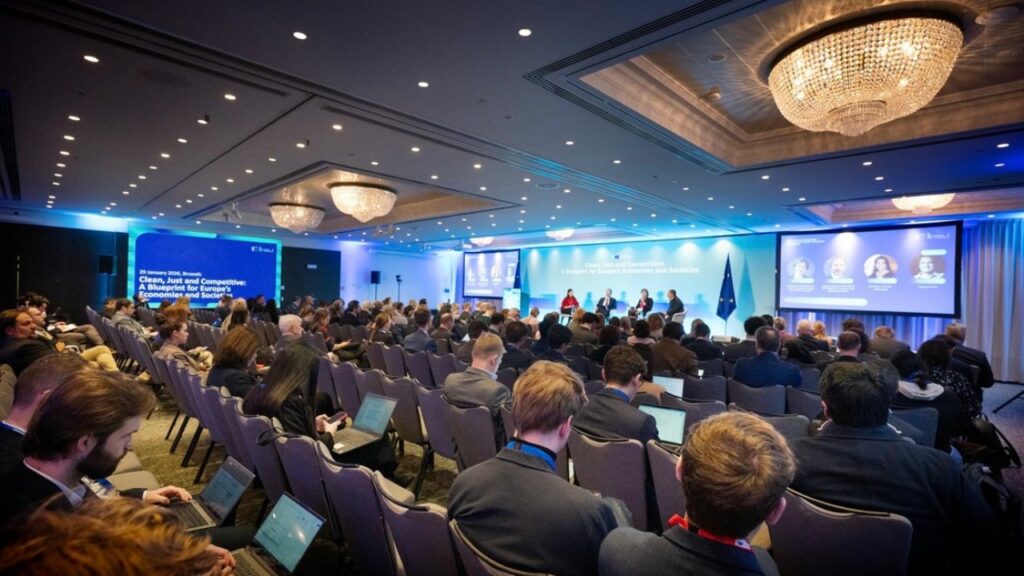
An event in partnership with The Parliament and co-hosted by the MEP Paulo Nascimento Cabral (EPP, Portugal), will bring together stakeholders from EU institutions, aquaculture and livestock sectors, and circular economy champions.
From a single feedstock, insect farming can deliver protein for animal feed and, increasingly, for food; lipids for industrial uses; and frass—a natural fertiliser that closes nutrient loops on farms, while achieving food waste reduction targets.
This multi‑output model aligns with regional biorefinery concepts that transform waste streams into a portfolio of products, rather than a single commodity.
The right policy mix—rooted in the EU framework for circularity and bioeconomy—can translate smart regulation into real market uptake
Concrete outcomes are on the table. The event aims to deliver:
- A binding EU action plan with milestones and governance that tracks resource efficiency, circularity, maturity, scale, and regulatory progress.
- Roadmaps for regional biorefineries and for integrating insect outputs into agri‑food supply chains.
- Harmonised End‑of‑Waste criteria and a clear biomass value hierarchy that guides investment, procurement, and policy alignment where insects are acknowledged and valorised.
- Public procurement criteria that support bio‑based soil enhancers and insect‑derived inputs (insect frass) catalysing market uptake.
The EU’s current political framework provides a powerful backdrop for this discussion. At the core is a convergence of three big strands:
- The Circular Economy Action Plan, aimed at reducing waste, boosting resource efficiency, and creating markets for circular products.
- The Vision for Fisheries & Aquaculture and CAP reforms, which set the direction for sustainable farming, animal nutrition, and rural development across the EU.
- The EU’s evolving bioeconomy policy, which seeks to mobilize biological resources for sustainable growth while protecting the environment.
- As Europe faces global volatility in inputs and climate pressures, the insect‑driven circular bioeconomy offers a timely, scalable pathway to resilience, rural livelihoods, and competitive, sustainable farming and aquaculture
As Europe faces global volatility in inputs and climate pressures, the insect‑driven circular bioeconomy offers a timely, scalable pathway to resilience, rural livelihoods, and competitive, sustainable farming and aquaculture.
“This one‑day summit is a turning point,” says Adriana Casillas, IPIFF President. “We’re aiming to leave with a concrete, action‑oriented plan that accelerates Europe’s leadership in a circular bioeconomy—built on insect biorefineries, soil health, and resilient food systems.”
📖 Read more about the event, in the featured article of the Parliament Magazine, here.
👀 Learn more about confirmed speakers and sponsors in the Event’s landing page, here.