IPIFF meetings
General Assembly meeting of the 13th of January.
IPIFF General Assembly of the 13th of January Charts Strategic Course for 2026
Adriana Casillas, IPIFF President stated that “In these challenging economic times, our first duty is to the producers who are the backbone of this industry. The unanimous approval of the fee reduction and flexible payment plans is a concrete demonstration of our commitment to their sustainability. By easing the burden on our members, we ensure they have the strength to innovate and scale up, allowing us to collectively seize the opportunities that 2026 will bring.”
At its January meeting, the IPIFF General Assembly adopted key decisions to strengthen the sector’s foundation and global reach.
Members unanimously approved a 20% reduction in Ordinary membership fees and a flexible payment plan to support producers during challenging times.
In a landmark move, the Assembly endorsed a new framework for Affiliated and Strategic Partnership members, enabling the close cooperation between IPIFF members and lead market players- animal nutrition, aquafeed, petfood, while at the same time paving the way for enhanced global cooperation—including a pioneering partnership with China’s CFNA to promote compliant trade.
The meeting also reviewed progress on critical technical work, including the nearing completion of the LCA Concept Note, and reinforced its advocacy efforts to position insect protein at the heart of EU food security and circular economy strategies.
Access the Meeting Minutes here (PDF).
IPIFF Task Force on Communication meeting of 11th of February paves the way for a Strengthened voice of the EU insect Sector
Adriana Casillas, IPIFF President, stated: “In an era where misinformation can spread as fast as innovation, a strong, unified voice is our most powerful asset. The Communication Task Force is building the armor our sector needs—not just to tell our story, but to defend it. By leveraging our academic network and peer-reviewed science, we are ensuring that the conversation around insect protein is rooted in fact, not fiction. Together with our global partners and market leaders, we are sending a clear message: the EU insect sector is transparent, resilient, and here to stay.”
The IPIFF Communication Task Force convened to align on a robust strategy to amplify the sector’s voice and defend its interests.
Key internal updates include the relaunch of the monthly newsletter, the introduction of weekly updates for members, and the completion of critical policy tools such as the LCA Concept Note and a Report on insect meal in aquaculture and Policy Recommendations towards the uptake of insect meal as sustainable aquafeed.
A significant focus was placed on crisis communication management, with members strategising on how to counter narratives from counter-lobby groups like ONEI by leveraging the sector’s academic network and peer-reviewed science.
To bolster the industry’s image, the Task Force will strengthen media partnerships, enhance social media engagement, and align key messaging with global partners in China, Turkey, the UK, and Brazil. Concurrently, efforts are underway to forge strategic alliances with major market players (e.g., Biomar, Mars, FEFAC) to ensure a united front in promoting the insect sector’s vital role.
Policy Meetings
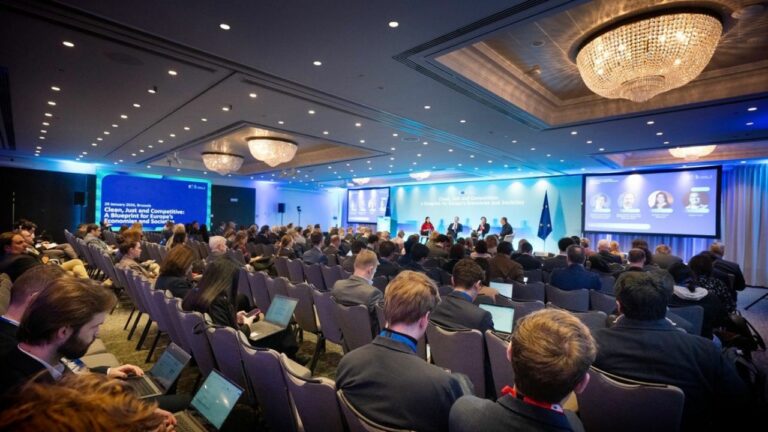
IPIFF at the CISAF Blueprint Conference: Positioning Insect Bioconversion as a Strategic Clean Technology
Adriana Casillas, IPIFF President, stated: “The adoption of the Clean Industrial Deal State Aid Framework marks a turning point, but a framework without implementation is merely a blueprint. Our message to Member States is clear: insect bioconversion is not just compatible with CISAF—it is a prototype for what the framework aims to achieve. By explicitly recognizing our sector in national aid schemes, policymakers can unlock a triple win: industrial decarbonization, circular food systems, and a tangible step toward European strategic autonomy. The science is proven, the technology is ready, and the sector is prepared to deliver.”
On the 29th of February, IPIFF Secretary-General Steven Barbosa addressed the high-level Blueprint Conference in Brussels, where he underscored the insect sector’s direct alignment with the EU’s Clean Industrial Deal State Aid Framework (CISAF)—adopted in June 2025 and active until 2030.
Barbosa highlights how insect farming delivers on CISAF’s core objectives: industrial decarbonization by transforming agri-food by-products into protein, cutting methane, and displacing carbon-intensive soy imports; manufacturing capacity in clean technologies by scaling first-of-a-kind bioconversion facilities; and de-risking private investment to bridge the “valley of death” for pioneering companies. He called on Member States to explicitly recognize insect bioconversion as a strategic clean technology within national CISAF aid schemes, enabling targeted support for infrastructure, capital investment, and financial guarantees.
With the blueprint set and the tool now in Member States’ hands, Barbosa emphasized that the sector is ready to deliver on Europe’s goals of strategic autonomy, circularity, and decarbonization—turning dialogue into actionable policy.
IPIFF at the Civil Dialogue Group: Insect Farming—A “Hidden Engine” of the EU Bioeconomy
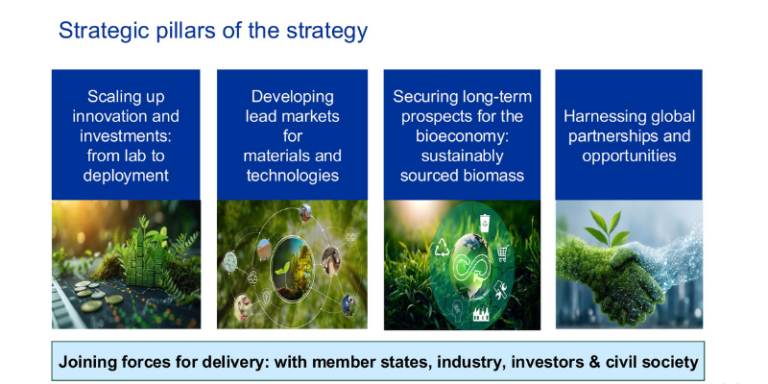
Adriana Casillas, IPIFF President stated: “Europe has the strategy; the insect sector has the solutions. As we engage with the Circular Bio-Based Europe Joint Undertaking, we will champion three strategic pillars: first, regulatory sandboxes to fast-track innovation; second, market-pull mechanisms to unlock €10 billion in investment; and third, the recognition of insect bioconversion as a foundational pillar of the EU’s cascading use hierarchy. Our members have proven we are ready, credible, and investable. Now we need the policy architecture to match our ambition.”
On 30 January, IPIFF Secretary-General Steven Barbosa addressed the Civil Dialogue Group on Animal Production, where the European Commission presented its updated Bioeconomy Strategy.
Drawing on a recent European Environment Agency report, Steven Barbosa positioned insect farming as a critical solution to the “valleys of death” facing biotech scale-ups, offering the most efficient pathway to transform agri-food side streams into high-value proteins and biopolymers. He called for regulatory sandboxes to accelerate insect product approvals, market-pull mechanisms to secure €10 billion in offtake by 2030, and formal recognition of insect bioconversion as a Tier 1 application in cascading use guidelines.
The intervention highlighted that the sector is no longer awaiting validation but delivering results—exemplified by IPIFF members Tebrio, which improved its B Corp score by 11 points, and Innovafeed, which renewed its certification with an enhanced score of 118/200. These achievements underscore that the insect sector is ready, credible, and investable as the EU moves from strategy to execution in the next Multiannual Financial Framework.
As a follow-up, IPIFF Secretary General and IPIFF President, Adriana Casillas, are to meet the Director General of the Circular Bio-Based Europe Joint Undertaking.
IPIFF at the Civil Dialogue Group: Positioning Insect Farming in the Future CAP
Adriana Casillas, IPIFF President stated: “Europe’s next budget is more than a financial exercise—it is a strategic blueprint for rural transformation. With nearly €50 billion earmarked for rural investments, we have the resources to scale insect farming across the continent. But resources without recognition remain out of reach. That is why IPIFF is launching a dedicated Task Force on Catalyzing Finance: to ensure insect bioconversion is embedded in the new National and Regional Partnership Plans from day one. Our sector turns waste into value; now we need the funding frameworks to turn that value into rural resilience.”
On the 2nd of February, IPIFF Secretary-General Steven Barbosa attended the Civil Dialogue Group on CAP Strategic and Horizontal Matters, where the European Commission presented its vision for the 2028–2034 Multiannual Financial Framework.
Drawing on the “Europe’s Budget” document, Barbosa highlighted significant opportunities for the insect sector within the proposed National and Regional Partnership (NRP) Plans, which integrate CAP support with other EU funding streams under a harmonized framework.
With a minimum ringfenced CAP allocation of €293.7 billion for farm income support and an additional €453 billion available through non-ringfenced NRP resources—including at least €48.7 billion dedicated specifically to rural investments—the new architecture offers a pathway to deploy insect farming solutions at scale.
Barbosa emphasises that insect producers stand to benefit from synergies between CAP investments and Horizon Europe or the European Competitiveness Fund, particularly in areas such as biogas production from agricultural residues, biobased fertilizers, and integrated territorial value chains. He called for formal recognition of insect bioconversion within these funding streams, enabling farmers and rural communities to harness the sector’s potential to transform low-value side streams into high-value proteins, lipids, and soil fertilizer—turning waste into value while contributing to EU decarbonization and competitiveness goals.
Steven Barbosa also stresses that this is one of the different Dossiers to be tackled in the upcoming IPIFF Task Force on Catalyzing Finance.
IPIFF at the Civil Dialogue Group: Unlocking Opportunities in Organic Simplification
Adriana Casillas, IPIFF President states: “What is good for poultry can be good for insects. The organic revision demonstrates the Commission’s commitment to cutting red tape and enhancing competitiveness across the board. As we follow this file closely, our message is consistent: insect farmers deserve the same regulatory predictability and simplification opportunities afforded to other livestock sectors. Whether through the authorization of insect protein in organic poultry feed or the formal recognition of organic insect frass, we will continue engaging to ensure the insect sector is not left behind as Europe streamlines its organic rulebook.”
On the 4th of February, IPIFF Secretary-General Steven Barbosa participated in the Civil Dialogue Group on Poultry and Eggs, where the European Commission presented its targeted amendments to simplify the organic rulebook under the revision of the Organic Basic Act.
While the proposals primarily address poultry—including tailored conversion periods for quails, aligned withdrawal periods for veterinary treatments, and flexible open-air access requirements for young birds—the simplification drive carries significant implications for the insect sector.
The revision signals the Commission’s commitment to reducing administrative burden and enhancing competitiveness across organic production systems, with estimated savings of €9.5 million annually for egg producers alone.
For insect farmers, this momentum creates a favourable pathway to advocate for recognition of insect-derived products—such the authorization of conventional insects in organic poultry production or to further advocate for the conclusion of the organic production methods for insects or the recognition of organic insect frass—within future organic rules, particularly as the roadmap includes a 2026 report on protein feed derogations and ongoing EGTOP advice on stocking densities. IPIFF will continue engaging to ensure insect producers benefit from the same regulatory predictability and simplification opportunities afforded to other livestock sectors.
Strengthening the Feed Value Chain: IPIFF and FEFAC Deepen Cooperation
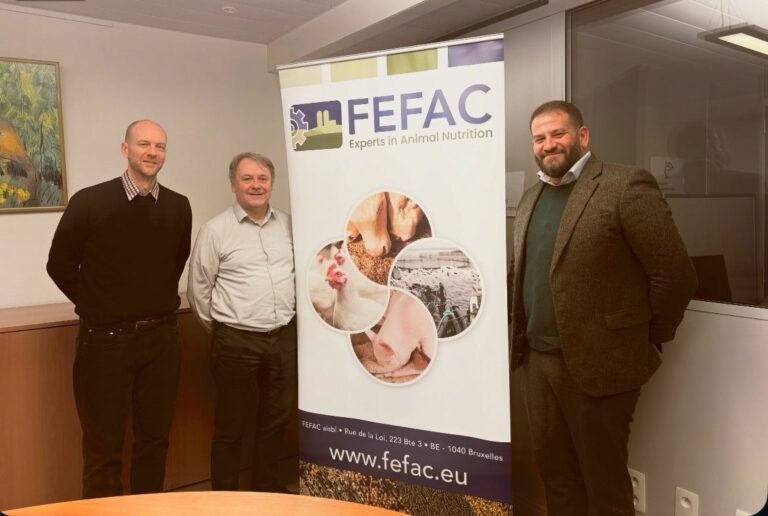
Adriana Casillas, IPIFF President stated: “Conventional and innovative. Traditional and transformative. These are not opposites—they are partners in building Europe’s protein future. Our ongoing collaboration with FEFAC, from the Feed Chain Task Force to the Circular Feed Platform, proves that cross-sector alignment delivers real results. As we enter critical policy discussions—including next week’s European Parliament dialogue on circularity in animal feed—IPIFF and FEFAC stand together. Our message is unified: to strengthen food sovereignty, advance circularity, and secure Europe’s competitive edge, we must harness every protein source at our disposal. Insects included.”
IPIFF Secretary-General Steven Barbosa met with FEFAC representatives last week to reinforce the strategic partnership between Europe’s conventional and innovative protein sectors. The discussions underscored the vital work underway through joint initiatives such as the Feed Chain Task Force and the Circular Feed Platform—proof that cross-sector collaboration delivers systemic change.
At a pivotal moment when the European Commission is shaping policy across the livestock workstream, Protein Strategy, Fertilizer Action Plan, Common Agricultural Policy, and Circular Economy, this alignment is more critical than ever.
By bridging expertise and uniting voices, IPIFF and FEFAC are strengthening the entire feed value chain, advancing sustainability and circularity, and building the resilience needed to secure Europe’s food sovereignty and a stronger, more competitive future for European agriculture.
FEFAC is to attend the next week’s meeting with the Member of the European Parliament Paulo Nascimento Cabral together with IPIFF to discuss an Own Initiative Report from the European Parliament on Promoting Circularity in Animal Feed and Boosting the uptake of biobased novel proteins such as insects or algae.
Global Cooperation
Global Partnerships in Action: IPIFF and Africa Circular Unite for Sustainable Food Systems
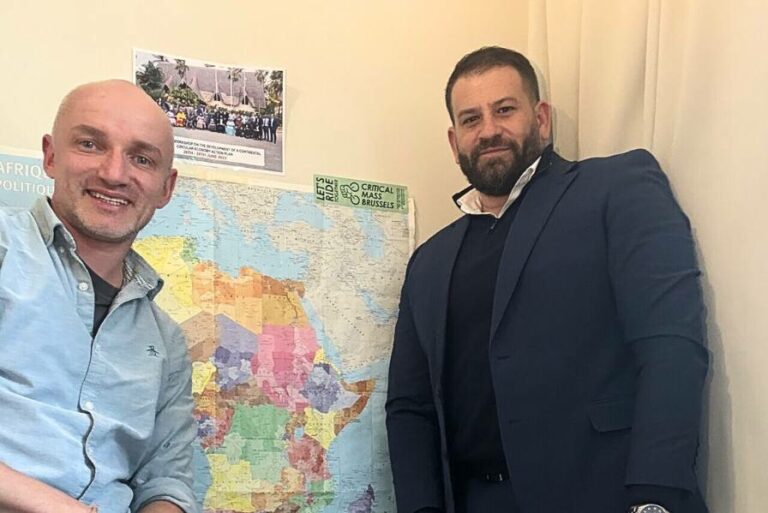
Adriana Casillas states “From Brussels to Africa, from Indonesia to Brazil, the insect sector is proving that circular economies are a global language. Our dialogue with Africa Circular marks another step in building an inclusive advocacy network that connects expertise across regions. Together with partners like the World Bank and United Nations, we are unlocking insect farming’s potential to nourish communities, create livelihoods, and build resilience from the ground up.”
Last week, IPIFF Secretary-General Steven Barbosa met with Piotr Barczak of Africa Circular in Brussels to strengthen cooperation on integrating insect farming into African agriculture as a driver of food security, green jobs, and circular economies.
The dialogue underscored the insect sector’s alignment with the UN Sustainable Development Goals and the transformative potential of insect production across continents—from ongoing engagements in UK, China, Brazil, Lebanon, and Turkey to emerging projects in Indonesia and Asia.
Africa Circular’s pioneering work, supported by partnerships with the World Bank and United Nations, exemplifies how local action backed by global frameworks can deliver meaningful development.
This meeting reaffirmed IPIFF’s commitment to building an inclusive, global advocacy network that connects expertise across regions, fosters public-private cooperation, and unlocks the full potential of insect farming to create a circular, resilient, and nourished planet.
Strengthening Cross-Channel Cooperation: IPIFF and UK Edible Insects Association Forge Closer Ties

Adriana Casillas, IPIFF President stated: “The English Channel connects more than it separates. Our strengthened partnership with the UK Edible Insects Association proves that cooperation transcends politics. Through aligned advocacy, coordinated communication, and joint event strategies, we are building a resilient, globally connected industry that speaks with one voice—whether in Brussels, London, or beyond. The affiliated membership proposal now before the IPIFF Board will make this partnership official, but our work together has already begun.”
IPIFF Secretary-General Steven Barbosa met recently with representatives of the UK Edible Insects Association to discuss a mutual cooperation agreement, marking a significant step toward aligning strategies across European and UK markets.
The discussions focused on three core pillars: reinforcing joint policy, advocacy, and lobbying approaches to ensure regulatory coherence and sectoral recognition on both sides of the Channel; presenting a seamless and unified communication front to amplify the industry’s voice; and coordinating efforts on a global industry events calendar to maximize visibility and impact.
This strengthened partnership underscores the shared commitment of EU and UK insect producers to work together in advancing the sector’s interests, harmonizing key messages, and building a resilient, globally connected industry.
The partnership is to become official with the submission to the IPIFF Board of an Affiliated Membership Proposal on behalf of the UK Edible Insect Association.
Next Steps on Global Cooperation:
- Meeting to discuss an Affiliated Membership Status for Chinese counterparts on the 27th of February
- Proposal for an Affiliated Membership for a Brazilian company
- Proposal for an Affiliated Membership for a Lebanon company
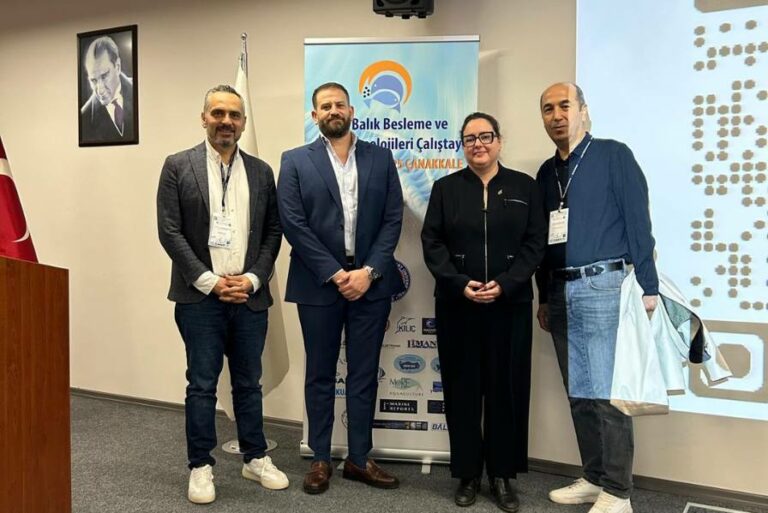
- Proposal for an Affiliated Membership for Turkish Research institutes and companies
Strategic Affiliated IPIFF Members: Connecting insect industry with its key lead markets
Forging Strategic Alliances: IPIFF and DLG Explore Partnership to Amplify the Insect Sector
IPIFF President reiterates “From the main stage at EuroTier to the strategic discussions with global feed and food leaders, the message is consistent: the insect sector has arrived. DLG’s invitation to partner as a Strategic Member—and to feature our industry prominently at their premier events—demonstrates that controlled environment agriculture and alternative proteins are now central to the agricultural conversation. As we finalize this partnership and advance discussions with Mars, Biomar, Skretting, and Argenta, we are building the alliances that will define the next decade of our sector’s growth.”
IPIFF Secretary-General Steven Barbosa met with representatives of the German Agricultural Society (DLG)—a non-profit, politically independent network of over 31,000 members worldwide—to explore avenues for strategic cooperation.
During the discussions, IPIFF was invited to deliver a keynote speech at the Inhouse Farming Feed & Food Convention in Hamburg (21–22 April 2027) and to participate in the Expert Stage programme at EuroTier 2026 in Hanover in November 2026, offering a premier platform to showcase the insect sector’s role in controlled environment agriculture and alternative proteins.
Building on this engagement, DLG proposed becoming an IPIFF Strategic Member, a partnership that would unite the insect industry with one of the world’s largest agricultural networks, unlocking opportunities for joint advocacy, knowledge exchange, and global visibility. This collaboration would send a powerful signal of the sector’s maturity and its integral place within mainstream agricultural and food systems.
Next steps for Strategic Memberships and Cooperation:
- Discussions with Mars
- Discussions with Biomar
- Discussions with Skretting
- Discussions with Argenta