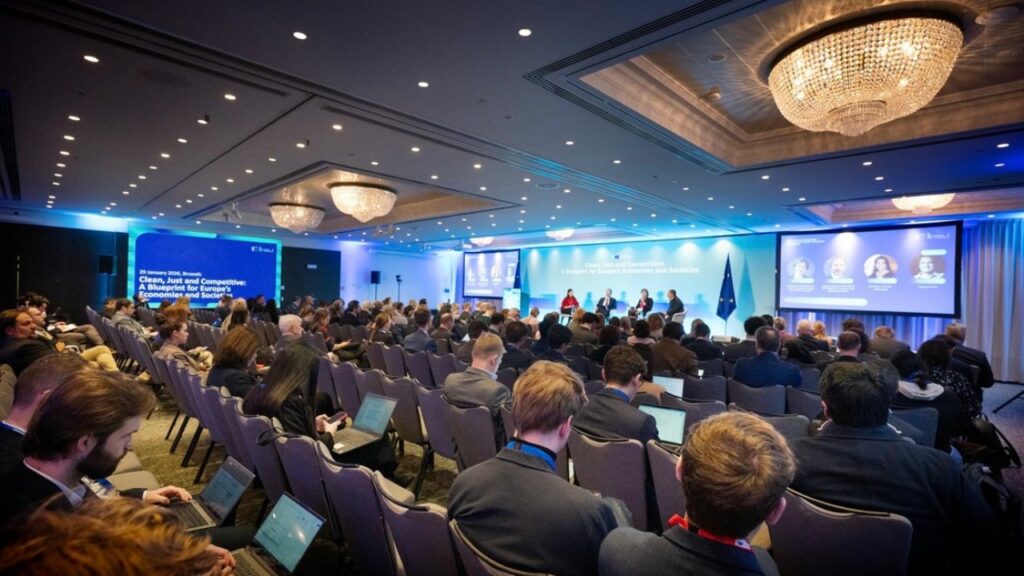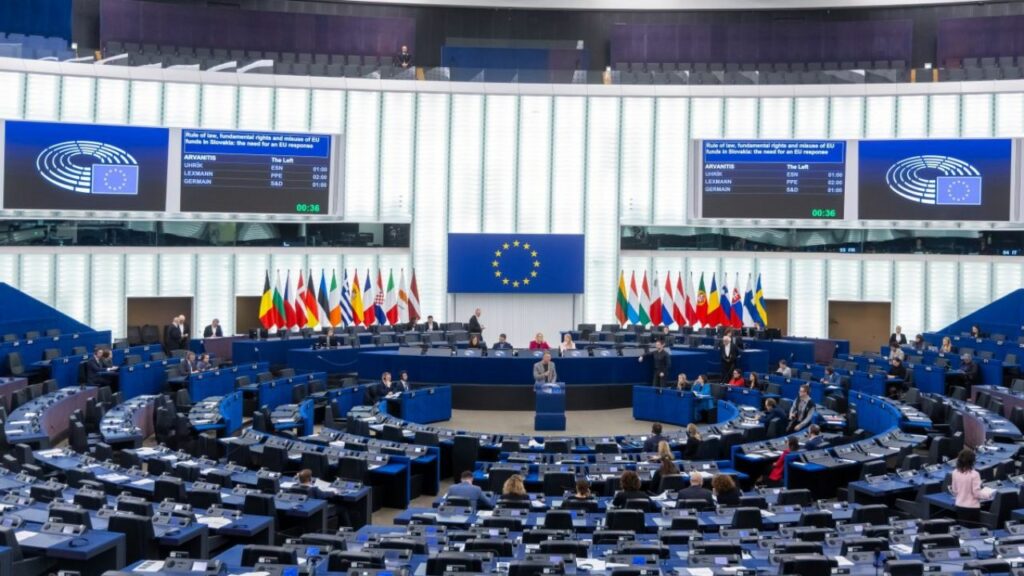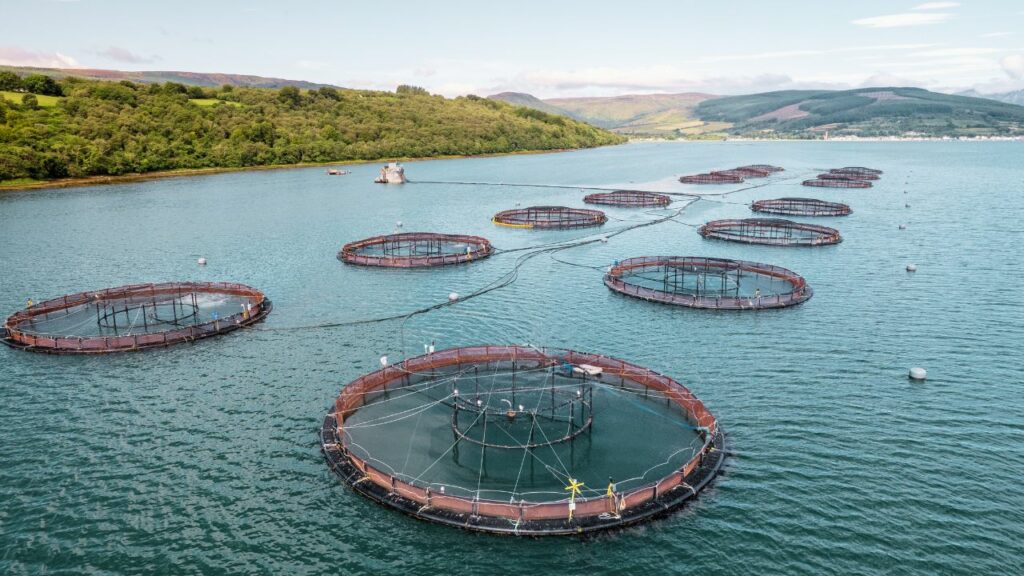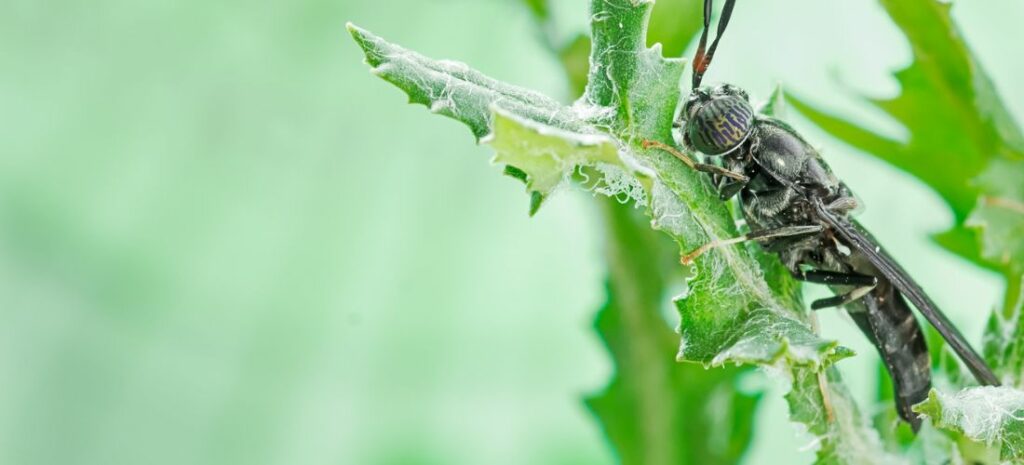
This summer, while Brussels may have quietened, our advocacy efforts at IPIFF have only intensified. As we prepare for a pivotal autumn, this edition of the Weekly Digest captures a sector that has moved decisively from awareness-raising to concrete policy influence. The milestones are significant: the 2026 EU Protein Plan has, for the first time, explicitly recognised insects as a strategic asset for Europe’s food security, backed by a clear mandate for circular feed. You can learn more about it in this edition.
We are capitalising on this momentum through our joint InnovProtein EU Alliance roadmap with EABA, our targeted advocacy on the Biotech Act, and our sustained engagement with the European Commission to position insect meal as a cornerstone of sustainable aquaculture, together with the European Federation of Aquaculture Producers.
We are also proud to welcome four new members—IRTA, ENEA, Gemidan, and Hermecia—whose expertise will further strengthen our collective voice.
In this edition, we also report on our policy work, including our position papers on Horizon Europe and the EU Ocean Act, and share insights from our high-level meetings with the Commission and Parliament.
The policy windows are open, the regulatory framework is evolving, and the insect sector is ready to deliver. Read on to discover how we are turning this momentum into tangible results for our members.
Policy Work
Joint InnovProtein revamped POLICY ROADMAP 2026-2029
IPIFF and EABA, in the frame of the InnovProtein EU Alliance, just revised a overreaching Policy Roadmap identifying policy areas where the two sectors converge and commit to work together towards common results.
The InnovProtein EU Alliance, a joint initiative of the International Platform of Insects for Food and Feed (IPIFF) and the European Algae Biomass Association (EABA), is pleased to announce the release of its Joint Policy Roadmap 2026-2032.
Titled “Advancing the Diversification of EU Protein Production with Insects and Algae: Towards a More Sustainable and Resilient Food System”, the roadmap outlines a strategic vision to accelerate the integration of insect and algae proteins into Europe’s food and feed systems.
Why This Matters
The roadmap responds to pressing challenges facing the EU: climate change, geopolitical instability and import dependency on critical raw materials. By harnessing the complementary strengths of insects and algae, the Alliance aims to contribute to a more diversified, circular, and resilient protein production model—benefiting farmers, citizens, and the environment alike.
Key Policy Actions
The roadmap identifies critical EU policy windows and outlines concrete actions:
- Revision of the EU Protein Plan — Advocate for concrete support measures for insect and algae proteins following their recognition in the renewed Action Plan.
- Post-2027 Common Agricultural Policy (CAP) — Push for inclusion in agri-environmental schemes and support for circular, sustainable production.
- Circular Economy Act — Position insects and algae as strategic pillars of a low-dependency food system.
- Biotech Act II — Call for streamlined, harmonised regulatory frameworks.
- EU Startup and Scale-Up Strategy — Unlock finance and growth conditions for protein innovators.
- Bioeconomy Strategy — Secure targeted support for both sectors
- EU Vision for Fisheries and Aquaculture- Secure support towards an increased uptake of sustainable EU made aquafeed ingredients from insects and algae.
> Read the InnovProtein EU Alliance Policy Roadmap
INNOVPROTEIN EU ALLIANCE CALLS FOR INCLUSIVE BIOTECH ACT TO SUPPORT ALGAE AND INSECT INNOVATION
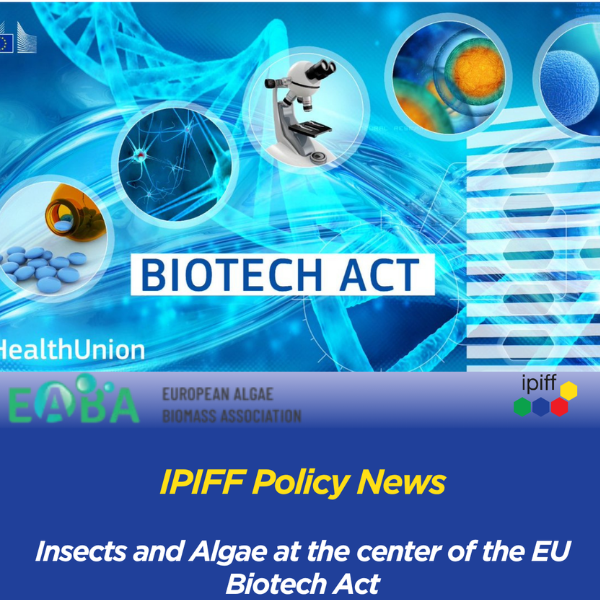
The InnovProtein EU Alliance—represented by the European Algae Biomass Association (EABA) and the International Platform of Insects for Food and Feed (IPIFF)—has published a joint position paper in response to the European Commission’s Call for Evidence on the proposed European Biotech Act (COM (2025) 1022).
While the Alliance strongly supports the Act’s ambition to streamline regulation, accelerate innovation, and boost Europe’s biotechnology competitiveness, the paper identifies critical areas where the proposal could be strengthened to ensure that algae- and insect-based biotechnologies are fully recognised and supported.
Key Recommendations:
1. Explicit Recognition of Algae and Insect Biotechnology
The Alliance welcomes the Act’s broad definition of biotechnology but notes that the proposal predominantly focuses on health and medical applications. To avoid overlooking established biomanufacturing platforms in food, feed, and nutrition, the Alliance calls for explicit reference to microalgae, macroalgae, and insects as technologies that contribute to food safety, security, and sustainable biomanufacturing.
2. Support for EFSA Reforms
The proposed expansion of EFSA’s pre-submission scientific advice is warmly welcomed. This measure is particularly important for novel algae- and insect-derived products, where applicants often face complex questions regarding composition, production, and safety. The Alliance supports efforts to improve panel consistency, reduce delays, and enhance application quality.
3. Remove Novel Food Exclusion from Regulatory Sandboxes
While the introduction of regulatory sandboxes is a positive step, the Alliance expresses concern that novel foods are explicitly excluded from this framework. Given that many algae- and insect-based innovations fall under the Novel Food Regulation, this exclusion undermines the sandbox’s potential to support innovation. The Alliance urges the Commission to either remove the exclusion or allow novel food applicants to participate under appropriate safety safeguards.
4. Include Algae and Insects in Strategic Mapping
The Alliance encourages the Commission to ensure that algae and insect biotechnology sectors—including cultivation and food/feed applications—are adequately reflected in the upcoming strategic mapping of the EU biotechnology ecosystem. This will provide a more complete picture of Europe’s industrial capacities and dependencies.
A Vision for a Competitive and Resilient Europe
The InnovProtein EU Alliance remains fully committed to the objectives of the Biotech Act and believes that with these targeted adjustments, the Act can better support the full diversity of European biotechnology innovation—strengthening competitiveness, resilience, and food and feed security across the Union.
> Read the Joint Position Paper
> Read the individual IPIFF Position Paper
Sustained close engagement with European Commission- Sustainable Aquafeed
Since July 2025 IPIFF is engaging directly with the European Commission towards an increase uptake of insect meal as aquafeed. As the aquaculture industry faces mounting pressure to secure sustainable, high-quality protein sources, IPIFF has intensified its advocacy efforts to position insect meal as a cornerstone of the EU’s future aquafeed strategy.
High-Level Political Engagement
On 29 February 2025, IPIFF Secretariat represented by Steven Barbosa and Board Members Frank van Sluis and Sébastien Crépieux met with Commissioner for Fisheries and Ocean, Mr. Costas Kadis’ cabinet members. The delegation presented the current state of the insect sector, highlighting the nutritional, functional, and fish health benefits of insect meal, while emphasising its potential to improve the overall competitiveness of the EU aquaculture sector.
Building on this dialogue, IPIFF submitted a Position Paper on the Evaluation of the Common Fisheries Policy (CFP) Regulation on 21 April 2025. The paper sets out concrete policy recommendations for the European Commission to promote alternative aquafeed ingredients—including insect meal—within the post-2027 CFP framework.
From July until the end of 2025 IPIFF participated in several bilateral meetings with the European Commission. During this period, IPIFF members contributed to the questionnaire feeding the aforementioned study and IPIFF organized two online sessions gathering insect producers, aquafeed producers and academics together with the European Commission.
On July 2026, IPIFF Secretariat and Board Member Aude Guo participated in a follow-up meeting with the consultant tasked by the European Commission with developing the study. The study is expected to be published late this year.
During 2026 IPIFF also submitted its Position Papers towards an EU Vision for Aquaculture and Fisheries for 2040, the role of insect production towards prosperous coastal communities.
> Please access here the IPIFF Position Paper Vision for Aquaculture and Fisheries
> Please access here the IPIFF Position Paper towards prosperous coastal communities
Also, over the past months, IPIFF has been actively communicating in the media about the role of insects in aquafeed, referencing several market reports that highlight the growing importance of novel ingredients. These communications reinforce the message that insect meal is not merely a niche alternative, but a key enabler for the continued growth and competitiveness of EU aquaculture.
> Please read here the most recent News Media article from IPIFF on insect meal as aquafeed
> Please access here the media links
What’s Next on the Agenda: Synergies between IPIFF and the European Federation of Aquaculture Producers
IPIFF has outlined a series of ambitious next steps:
IPIFF is currently awaiting the results of the Study on Sustainable Aquafeed and has already requested a follow-up meeting with the Commissioner for Fisheries and Ocean. The objective is to discuss concrete practices and policies that could effectively incentivize greater use of insect meal as a sustainable, EU-produced aquafeed ingredient.
This meeting request has also been extended to include the European Federation of Aquaculture Producers, as well as representatives from the algae sector. Together with aquaculture and algae producers, we aim to jointly advocate for targeted measures that would support the increased uptake of sustainable, EU-made aquafeed ingredients.
Webinar promoted by FEAP with IPIFF
At the same time, IPIFF has been working closely with the Federation of Aquaculture Producers (FEAP). After bilateral meetings between the two organizations’ secretary-generals, FEAP has extended an invitation for IPIFF to participate in a joint webinar on the role of insect meal as aquafeed. Attendees are to be members of both IPIFF and FEAP (Aquaculture producers Organizations) with the aim of aligning strategically towards advocating to the EU, incentives towards an increase uptake of insect meal as aquafeed by aquaculture producers.
This webinar has a provisional date of the 5th of October, being all IPIFF members invited to attend. More information is coming soon.
Parliamentary Initiative Report
Since 2025, IPIFF has been actively collaborating with Members of the European Parliament to advance an Own Initiative Report. In particular, the organisation has worked closely with MEP Paulo do Nascimento Cabral, Vice-Chair of the Parliamentary Committee on Fisheries, towards such a Report focusing on promoting sustainable, EU-made aquafeed. IPIFF continues to rally support from a broad coalition of organisations in view of formally submitting this proposal.
IPIFF Position Paper Horizon Europe – European Partnerships to be implemented as joint undertakings, aligned with the new European Competitiveness Fund.
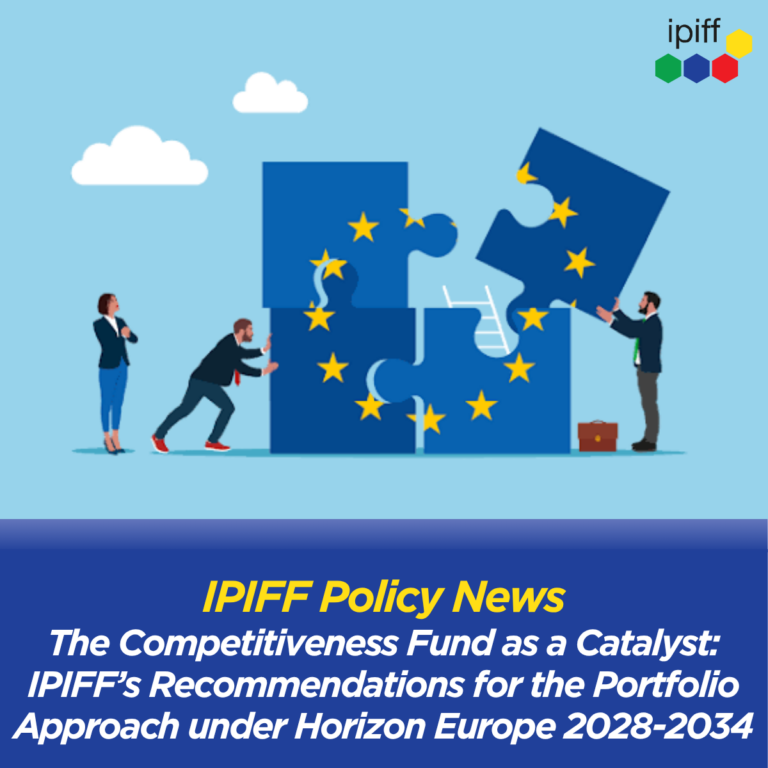
The European Commission launched the call for evidence Horizon Europe – European Partnerships to be implemented as joint undertakings, aligned with the new European Competitiveness Fund.
𝘛𝘩𝘦 𝘰𝘣𝘫𝘦𝘤𝘵𝘪𝘷𝘦 𝘰𝘧 𝘵𝘩𝘦 𝘶𝘱𝘤𝘰𝘮𝘪𝘯𝘨 𝘳𝘦𝘷𝘪𝘴𝘪𝘰𝘯 𝘪𝘴 𝘵𝘰 𝘤𝘳𝘦𝘢𝘵𝘦 𝘢 𝘮𝘰𝘳𝘦 𝘤𝘰𝘩𝘦𝘳𝘦𝘯𝘵, 𝘦𝘧𝘧𝘪𝘤𝘪𝘦𝘯𝘵, 𝘢𝘯𝘥 𝘪𝘮𝘱𝘢𝘤𝘵𝘧𝘶𝘭 𝘴𝘺𝘴𝘵𝘦𝘮 𝘵𝘩𝘢𝘵 𝘣𝘦𝘵𝘵𝘦𝘳 𝘴𝘦𝘳𝘷𝘦𝘴 𝘵𝘩𝘦 𝘌𝘜’𝘴 𝘯𝘦𝘸 𝘴𝘵𝘳𝘢𝘵𝘦𝘨𝘪𝘤 𝘱𝘳𝘪𝘰𝘳𝘪𝘵𝘪𝘦𝘴.
The EU has set ambitious goals for strategic autonomy, industrial decarbonisation, and competitiveness.
The new Single Basic Act (SBA) for Joint Undertakings and the ECF are pivotal tools to get us there.
Yet, as we stand at this policy crossroads, one critical question remains:
Are we building a framework that truly enables systemic bio-innovations to scale?
The European insect sector is a tangible, circular, and strategic solution that directly addresses:
- Reducing our 70% dependency on imported animal feed proteins
- Closing nutrient loops through circular waste valorisation
- Creating thousands of green jobs in rural areas
- Contributing to the Clean Industrial Deal and Protein Strategy
But we are facing a “valley of death” – a critical gap between pilot projects and industrial-scale deployment. The current framework is not designed for capital-intensive bio-innovations, and the EU risks losing this strategic opportunity.
In our position paper, we call for actions that really can support the scale-up of our sector:
- A dedicated “Bio-Innovation” Window under the ECF and Horizon Europe that values circularity, not just carbon reduction
- Blended finance mechanisms – including under InvestEU – to de-risk capital-intensive biorefinery infrastructure
- Streamlined regulatory timelines – including a binding 6-month deadline for novel food authorizations
Moreover, to address EU strategic priorities while supporting innovation, a strong alignment that unlocks powerful investment from the ECF across key sectoral policies—such as the CAP and Fisheries—can have a detrimental role in the deployment of our sector and many others.
The insect sector is ready to deliver on the objectives of strategic autonomy, competitiveness, and the green transition. But we cannot do it alone.
> Read the Position Paper here
IPIFF Position Paper on EU Ocean Policy
IPIFF submitted its response to the European Commission’s consultation on the proposed European Ocean Act.
This isn’t just about policy; it’s about recognising that a sustainable blue economy requires a fundamental shift in how we source aquafeed.
The facts are clear:
Aquafeed accounts for up to 80% of a producer’s environmental footprint. Insect meal offers a circular, low-carbon alternative that reduces pressure on wild fish stocks.
Strategic Autonomy: The EU imports ~70% of its animal feed protein. Insect meal, produced locally in controlled environments, is the key to breaking our reliance on imported soy and fishmeal.
Economic Resilience: By diversifying feed ingredients, we can insulate producers from global market shocks while creating up to 30,000 green jobs by 2030.
The insect sector is investment-ready, science-backed, and a strategic partner for the European Commission. To unlock our potential, we need a forward-looking framework.
> Please read the Position Paper here
EU Protein Action Plan
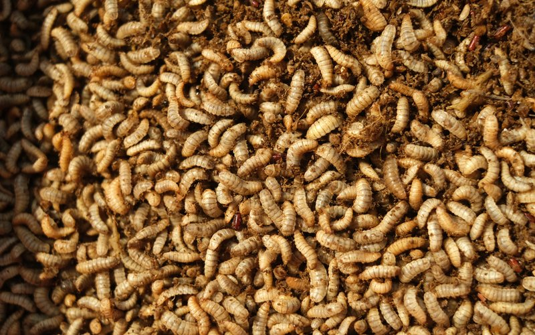
A Paradigm Shift in Brussels
It’s official: insects and alternative proteins are no longer on the periphery of EU policy. For the first time, the 2026 EU Action Plan for Protein (COM(2026) 355 final) explicitly recognises insects as a vital piece of Europe’s food security puzzle. This isn’t just a minor update; it’s a fundamental shift in strategy that moves beyond the 2018 plan, acknowledging the sector’s continuous calls for support on feeding substrates and scaling up.
While our organization feedback suggests more concrete measures needed to match the ambition, the political recognition is undeniable. The document references “alternative proteins” and “insects” multiple times, signaling a strong intent to integrate these sources into the EU’s agricultural and circular economy strategies.
What This Means for Investors
The EU Protein Plan is essentially a “Green Light” for capital deployment. The Commission has proposed the new EU Competitiveness Fund to support the scaling up of industrial plants producing alternative proteins, directly targeting the sector’s need to improve competitiveness and achieve economies of scale. Furthermore, dedicated R&I funding announced to be allocated towards the competitiveness and innovation of alternative protein sources, which also signals new opportunities.
What This Means for Insect Producers
For insect farmers, the plan delivers tangible, long-sought policy wins.
Circular Feed Mandate: The plan strongly encourages Member States to prioritize the use of former foodstuffs, by-products, and co-products in animal nutrition over lower-value options like biofuel or landfill. Importantly, it explicitly mentions “protein derived from insects” as a key component of this circular feed strategy . This is a vital step towards expanding the authorized feeding substrates, a key sector objective.
Access to CAP Support: The plan clarifies that support for scaling up production can be accessed under the new Competitiveness Fund. At the same time each EU Member States respective national strategic plans under the CAP is crucial. As mentioned in the EU Protein Plan, different Member States deployed initiatives to promote protein crops and alternative proteins. IPIFF is already actively engaging with Member States to make this happen. Meetings between IPIFF and representatives of EU MS such as Portugal and Spain took place in July while others are to be scheduled in September, such as with the Netherlands.
R&D Funding: The plan commits to funding research and innovation under the next Horizon Europe framework.
“to foster the competitiveness, sustainability and resilience of protein crops and alternative proteins”
What This Means for Policymakers
For EU and national policymakers, the 2026 Protein Plan offers a framework to deliver on strategic autonomy and environmental goals. However, industry representatives are pushing for more than just recognition.
The Road Ahead
The 2026 EU Protein Plan is a watershed moment that transforms insects from a niche concept into a recognised pillar of EU agricultural policy. For investors, it signals a de-risked, policy-backed growth corridor. For producers, it provides regulatory and financial tools to scale. For policymakers, it offers a pathway to reduce import dependency and build a more resilient, circular food system.
The conversation has officially shifted from “if” to “how.” Now is the time to engage and seize the momentum.
As the EU Member States are now starting the discussions towards the CAP Post 2027 this is the right timing for IPIFF members to engage with their national agriculture ministries to advocate support towards insect farming activities to achieve the objectives of 35% of EU made protein.
Informal Council meeting
IPIFF has already engaged with a series of EU Member States and will continue to do so as to ensure that the newly released EU Protein Plan can translate into concrete support measures under CAP National Strategic Plans. This is particularly relevant considering the upcoming Informal Meeting of Ministers of Agriculture and Fisheries taking place on the 6th and 7th of September, where the Protein Plan and EU Livestock Strategy will be discussed, namely the measures to be deployed from these policy initiatives.
IPIFF has ready all to support our members in outreaching their national ministries of agriculture. Do reach out and learn more about current engagement between IPIFF and EU Member States.
> Learn more about the EU Protein Plan and Livestock Strategy here
EU Livestock Strategy
The EU Livestock Strategy: A New Dawn for European Insect Farming
The European Commission has officially adopted its first-ever EU Livestock Strategy, and for the insect sector, it signals a significant vote of confidence. This strategy is not just about maintaining the status quo; it’s a blueprint for a more resilient, sustainable, and competitive future for the entire livestock industry.
At its heart, the strategy aims to strengthen risk management, improve animal welfare, and enhance the sector’s environmental footprint. Crucially, it puts a strong emphasis on circularity and the bioeconomy—a development that aligns perfectly with the core strengths of insect producers.
Turning Waste into Worth
The strategy outlines a clear path towards a fully circular approach in livestock production. This means moving beyond the traditional “take-make-dispose” model to one where waste is systematically valorized. The vision is to enable the valorizing of all by-products and biomass to generate additional income for farmers, while reducing the carbon footprint of livestock production.
This is where the insect sector shines. For years, insect farmers have championed the ability to transform low-value agricultural co-products and food residues into high-quality proteins and fats. The new strategy’s focus on circularity transforms this concept from a niche environmental benefit into a mainstream business case. By using these side streams, insect farming enhances feed autonomy and maximizes biomass valorization, which in turn reduces waste and provides more predictable income streams for farmers.
A Strategic Asset for Europe’s Autonomy
The EU Livestock Strategy explicitly recognises the livestock sector as a key strategic sector for the Union’s competitiveness and open strategic autonomy. By reducing the EU’s heavy reliance on imported proteins like soy, insect protein can significantly bolster this resilience. As a home-grown, scalable protein source, it can directly contribute to the EU’s Protein Strategy and shield its food system from geopolitical instability and global market fluctuations.
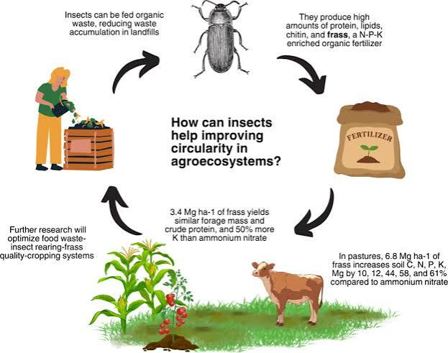
Beyond Protein: Insect Frass
The strategy and a recent EU parliamentary debate have highlighted the importance of by-products like wool and manure as resources, not waste. This logic applies equally to insect by-products, which serve multiple purposes in a circular bioeconomy. With the soon expected amendment to the EU Fertilizing Products Regulation as to include insect frass under CMC 10, insect producers will be able to benefit from the incentives currently being deployed towards farmers’ purchasing of domestic biobased fertilizers.
As the EU moves towards implementing its new Livestock Strategy and the upcoming Protein Action Plan, the insect sector is poised for transformative growth.
IPIFF New Members
We are thrilled to announce that IRTA has officially joined as an IPIFF Knowledge Sharing Member
Big news for the European insect sector!
IRTA is a leading research institute from Catalonia, with a mission to boost competitiveness and foster sustainable development in agriculture, food, and aquaculture.
Their pioneering work on insect protein—like the ALTEMO project studying Tenebrio molitor as a sustainable feed alternative—is exactly the kind of research that drives our industry forward.
By bringing IRTA’s scientific expertise into the IPIFF (International Platform of Insects for Food and Feed) network, we are reinforcing our commitment to building a robust, science-based, and sustainable insect sector in Europe.
> Learn more about their work here
We are thrilled to announce that ENEA, the Italian National Agency for New Technologies, Energy and Sustainable Economic Development, has joined IPIFF as a new member!
This is a significant step forward for the entire European insect sector. ENEA is a powerhouse of multidisciplinary research and innovation, bringing unparalleled expertise in the circular bioeconomy, sustainability, and advanced technologies.
Their work is already at the forefront of the industry, with pioneering research on:
✅ Improving the environmental sustainability of insect farming, such as using innovative feed sources like prickly pear to reduce energy consumption.
✅ Developing solutions for insect-based systems to convert waste into valuable resources—even for applications in space!
✅ Contributing to major EU projects like PROTEIN4IMPACT to develop alternative proteins from insects and other novel sources.
By joining IPIFF, ENEA strengthens the bridge between groundbreaking public research and the industrial insect sector.
This collaboration will be instrumental in shaping a science-backed, circular, and sustainable future for food and feed in Europe and beyond.
Welcome to the IPIFF family, ENEA! We look forward to driving innovation and policy together.
> Learn more about ENEA here
We are thrilled to announce that Gemidan A/S has joined IPIFF as our newest Observer member!
A warm welcome to Gemidan A/S, a Danish pioneer in the pre-treatment of organic waste. For them, food waste is not just waste—it’s a valuable resource.
Primarily supplying biogas plants for energy production and later used as fertilizer, supporting a truly circular economy.
With a growing network of facilities across Denmark, including a new state-of-the-art plant in Viborg, Gemidan A/S is making a tangible impact on the green transition./em>
At IPIFF, we strongly believe that sustainable solutions are key to the future of food and feed.
Gemidan A/S’s expertise in transforming organic side-streams into valuable resources aligns perfectly with the principles of a circular bioeconomy.
We look forward to their contribution to our community and the exciting collaborations ahead!
> Learn more about their innovative work, here
Exciting News! A New Force Joins the IPIFF Community!
We are absolutely thrilled to welcome Hermecia Kft, led by Bettina Gágosné Pataky as our newest Ordinary Member!
Based in Hungary, this forward-thinking company is on a mission to unlock the full potential of Black Soldier Fly (BSF).
With a sharp focus on innovation and cutting-edge production, Hermecia is not just farming insects—they are actively shaping the future of sustainable protein, driving BSF solutions across diverse end-markets.
By joining IPIFF (International Platform of Insects for Food and Feed), Hermecia brings fresh energy, expertise, and vision to our growing family.
Their commitment to scaling up insect production reinforces our collective voice and strengthens our advocacy for a more secure, resilient, and environmentally friendly food system.
Together, we are proving that insects are a powerful ally in building a more sustainable world—and with dedicated new members like Hermecia, our impact only gets bigger and bolder.
Welcome aboard, Hermecia! Thank you for trusting our community and for contributing to a more resistant, greener future for all.
> Learn more about their work, here.
IPIFF ONGOING WORK – YOUR INPUT IS NEEDED
Shape the Future of the European Insect Sector: Participate in the Critical 2025 IPIFF Industry Survey!
The European insect sector is no longer an emerging concept—we are in the midst of a rapid upscaling and commercial consolidation phase. Our progress is being watched by investors, policymakers, and value chain partners across the globe. To ensure our collective voice is heard clearly and backed by the most compelling evidence, we must speak with one voice, supported by the most current and robust data.
This is why the IPIFF Secretariat is thrilled to announce the relaunch of our flagship Industry Data Survey, now supercharged by the participation of the 50+ member companies of the UK Edible Insect Association. This unprecedented collaboration marks a significant step forward in the representativeness and impact of our advocacy work.
Why Your Participation Matters Now More Than Ever
The information you provide will be the bedrock of our upcoming advocacy toolkit, designed to support your business and the entire sector.
We are updating our core communication materials to reflect the reality of the market in 2025, 2026, and beyond. By contributing, you are directly shaping:
- The Updated Feed Market Factsheet: We need precise figures on the quantities of insect-based feed products commercialized in the EU in 2024 and 2025, along with your forecasts for 2026 and 2030. This data is critical to demonstrate our sector’s growth trajectory and potential to replace conventional proteins.
- The ‘IPIFF 2030’ Brochure (Updated Edition): Originally published in November 2023, this flagship document is being refreshed with your input. We will update key indicators such as:
- Total investments generated by the sector.
- The pace of new production plant construction.
- Job creation figures.
- The main drivers of success in our industry.
This updated brochure, scheduled for publication in May 2025, will be an indispensable tool for your own outreach to investors, commercial prospects, and media.
Your Input is the Final Ingredient
The IPIFF Secretariat is working diligently to consolidate this information to produce the new materials by May 2025. To meet this ambitious deadline, we need your response by the 30th of September.
> PARTICIPATE IN THE SURVEY NOW
IPIFF Annual Event
Do not forget to register to IPIFF General Assembly and IPIFF Annual Event taking place on the 7th and 8th of December in Brussels.
> Learn more and register here
As the EU confronts geopolitical instability, trade uncertainty, and climate change, insect production offers a strategic solution to strengthen Europe’s resilience and sustainability. This event will explore how insect-based ingredients can reduce dependence on imported proteins, create localized, circular protein loops, and support sustainable food and feed production—advancing the EU’s circular bioeconomy ambitions.
Beyond feed, insect frass—a nutrient-dense organic fertilizer—can replace imported synthetic fertilizers, directly addressing the fertilizer supply vulnerabilities exposed by recent geopolitical crises and aligning with the European Commission’s plans to secure fertilizer and food security.
Bringing together policymakers, industry leaders, and stakeholders, the discussion will address the policy, regulatory, and investment conditions needed to scale up the sector. With Europe at risk of losing its competitive edge, decisive action—including binding protein diversification targets and targeted incentives—is essential to position the EU as a global leader in sustainable bio-based production.
A Landmark Event at the European Parliament
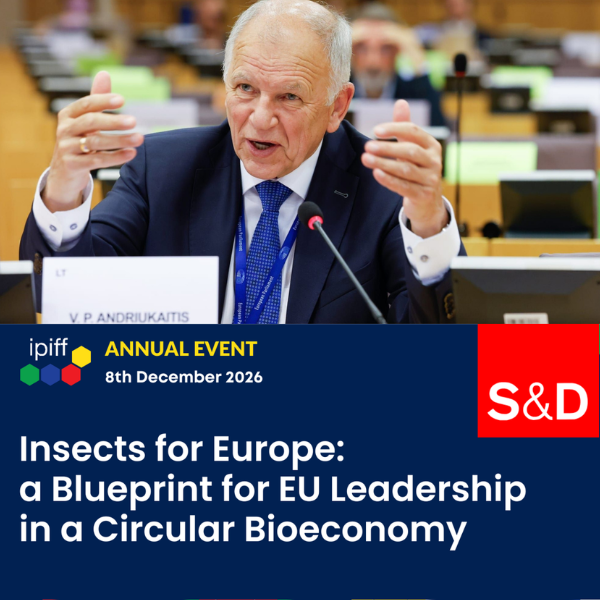
That is why we are thrilled to invite you to a pivotal gathering: “Insects for Europe: a Blueprint for EU Leadership in a Circular Bioeconomy,” taking place on 8th December 2026 at the European Parliament in Brussels.
Organised by IPIFF in partnership with The Parliament and co-hosted by MEP Paulo Nascimento Cabral (EPP, Portugal) and MEP Vytenis Povilas Andriukaitis (S&D, Lithuania) , this high-level summit marks a decisive moment for the insect sector and its role in Europe’s future.
Insect farming is no longer a niche concept; it is an industrial reality ready to scale. From a single feedstock, insect biorefineries can produce high-quality protein for animal feed (reducing our reliance on imported proteins like soy), lipids for industrial uses, and frass—a powerful, nutrient-rich organic fertiliser that closes the loop on our farms and enhances soil health.
This is the circular bioeconomy in action: transforming low-value agri-food side streams into high-value products while strengthening strategic autonomy and rural livelihoods.
Confirmed High-Level Speakers (more to be added gradually, stay tuned to IPIFF event website landing page)
We are honoured to welcome an exceptional line-up of thought leaders and decision-makers who will drive the conversation forward:
- Paulo do Nascimento Cabral – Member of the European Parliament (Co-host)
- Vytenis Povilas Andriukaitis – Member of the European Parliament (Co-host)
- Daniela Battaglia – Food and Agriculture Organization (FAO)
- Javier Ojeda Gonzalez-Posada – Federation of European Aquaculture Producers (FEAP)
- Anton van den Brink – European Feed Manufacturers’ Federation (FEFAC)
- Laura Payo Lewis – Argenta
- Geoffrey Knott – UK Edible Insect Association (UKEIA)
This distinguished group will bring diverse perspectives from EU institutions, international organisations, and key industry sectors to chart a concrete path forward.
Why Your Voice Matters
This event is a unique opportunity for policymakers, industry leaders, researchers, and circular economy champions to come together and shape the future.
As Adriana Casillas, IPIFF President, states: “We’re aiming to leave with a concrete, action-oriented plan that accelerates Europe’s leadership in a circular bioeconomy—built on insect biorefineries, soil health, and resilient food systems.”
The EU’s current political framework—including the Circular Economy Action Plan and the new Bioeconomy Strategy—provides a powerful backdrop for this discussion. Now is the time to ensure that insects are not just a footnote but a cornerstone of Europe’s competitive, sustainable, and sovereign future.
We look forward to welcoming you to Brussels for this pivotal event.
> Learn more and register
In our upcoming edition of the IPIFF INSIDER Weekly Digest
Looking ahead, the next issue of the IPIFF INSIDER will delve deeper into our internal work, providing an update on our Task Forces and a detailed breakdown of the game-changing inclusion of insect frass under CMC 10 of the EU Fertilizing Products Regulation.
We will also preview our upcoming Academic Session, to be scheduled alongside our General Assembly on 7 December, and share key takeaways from our recent engagements with the UN FAO and at major industry events.