Policy
I. Three EU Studies, One Clear Message: Insect Meal Is in the Future of Aquafeeds
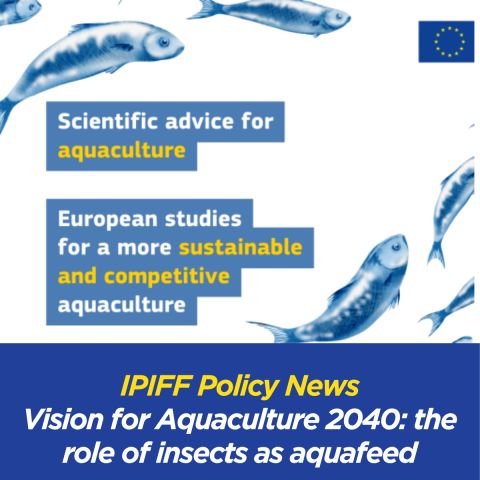
The European Commission has spoken—and insects are at the heart of its vision for a sustainable, competitive EU aquaculture sector.
Three landmark studies published by the European Commission together send an unmistakable political signal: insect-based feed is no longer a niche alternative—it’s a recognised solution for Europe’s aquafeed challenges. And with the upcoming Vision for Aquaculture 2040 set to be published this autumn, these studies form the evidence base that will shape the next 15 years of strategic policy.
The Three Studies & What They Mean for Insects
Study on Aquaculture Ecosystem Services (January 2026)
Insects are formally recognised under EMFAF Priority 2.1, creating direct funding eligibility for insect-based feed projects. This is a major win for the sector—and a clear signal that Brussels sees insect meal as a strategic investment.
Study on GHG Reduction & Net Zero Pathways (April 2026)
Insect meal offers a low-carbon alternative to conventional feed ingredients:
- BSF insect meal: 1.53 kg CO2eq/kg protein
- Fishmeal: 3–4 kg CO2eq/kg protein
The study calls for public and private investment to scale emerging ingredient production and recommends binding mandates to boost the competitiveness of novel feed ingredients.
Study on Feed for Aquaculture (August 2026)
This comprehensive 500-page analysis confirms what IPIFF and the EU insect sector have long championed:
- Nutritional validation is complete—100% fishmeal replacement has been successfully demonstrated in Atlantic salmon and rainbow trout.
- Regulatory bottlenecks must be removed—current restrictions on circular biomass streams are holding the sector back.
- Cost-competitiveness is the primary barrier—scaling is essential.
- Support Investment in alternative feed materials from local resources with good nutritional value, optimising feed conversion rates while being environmentally and socially sustainable.
- EU leadership is at risk—production is scaling faster in Asia, threatening Europe’s first-mover advantage.
This is not just a study—it is a political signal. It explicitly recognises insects as a key solution to Europe’s feed dependency, circular economy goals, and climate targets.
In a context where the EU imports 70% of its protein feed, insect meal is not just a nice-to-have—it is a strategic necessity for food security and climate resilience.
A Call to Action
These studies recall the EU Net Zero Aquaculture Study, which recommends that the European Commission replace the current reliance on non-binding guidelines with a stable regulatory framework for long-term investments.
The message is clear: insect meal is scientifically validated, strategically vital, and ready to transform EU aquaculture.
The question is no longer whether insects will play a role in Europe’s aquafeed future—it’s how quickly we can scale to meet the moment.
II. FAO’s new livestock report quietly makes the case for something bigger: nutrient circularity through insects
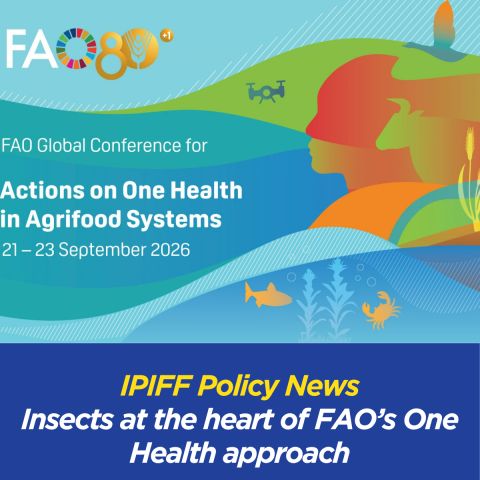
The report Contribution of the livestock sector to food security and sustainable agrifood systems lands at a critical moment.
Livestock provides 33% of global protein and 40% of agricultural GDP — roughly $1.8 trillion. But the report also flags the pressure point: feed–food competition for land is intensifying, pushing the sector toward better use of agro-industrial by-products, unconventional feed sources, grasslands, and marginal lands.
That framing matters enormously for the insect sector.
When FAO writes about optimizing “less conventional feed sources” and improving nutrient-use efficiency, insects are no longer a niche curiosity. They are a systemic solution to a structural problem the report itself identifies. Insects convert organic by-products and residues into high-quality protein and lipids — closing nutrient loops that conventional feed systems leave open. This is precisely the circular logic the report calls for.
For the EU livestock sector, the stakes are concrete. Europe remains heavily dependent on imported protein feed and exposed to climate volatility, including drought.
Insects offer a locally-producible, circular alternative that reduces that vulnerability while aligning with the EU’s agriculture, livestock and protein diversification agenda. Insect-derived ingredients for feed are increasingly recognised within the EU framework.
Following IPIFF (International Platform of Insects for Food and Feed) Secretary-General Steven Barbosa‘s participation as a speaker in the FAO webinar held in the run-up to this report, both the Secretary-General, Steven Barbosa, and IPIFF (International Platform of Insects for Food and Feed) President Adriana Casillas attended the FAO Report launch in Rome on 23 September — a clear signal that the insect sector is engaging directly with the global policy conversation this report shapes.
The FAO report doesn’t prescribe a single model. But it does validate the logic: if livestock systems must do more with fewer external inputs, insect-mediated nutrient recycling belongs in the toolbox.
III. Insect Frass about to Enter the EU Fertilising Products Regulation: A Small Technical Amendment, a Big Step for the Bioeconomy
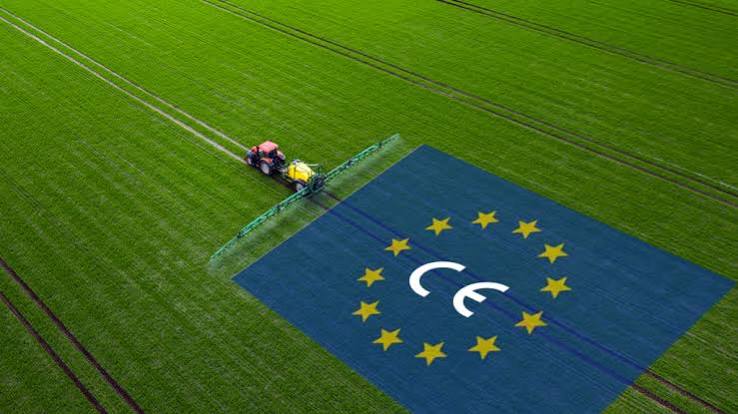
A long-awaited regulatory change is about to land. The European Commission has a draft Delegated Act that, for the first time, includes processed insect frass among the permitted component materials under Component Material Category 10 (CMC 10) of the EU Fertilising Products Regulation (FPR). For insect producers, this is not merely a labelling update—it is the moment their residual stream can legally become a CE-marked fertilising product sold across the single market.
What the Delegated Act Does
CMC 10 currently covers only processed manure. The draft regulation adds eight categories of derived animal products, including processed frass. The legal basis is Article 42(1) of Regulation (EU) 2019/1009, which allows the Commission to add derived products to CMC 10 only where an end point in the manufacturing chain has already been determined under the Animal By-Products Regulation.
For frass, that end point already exists. Delegated Regulation (EU) 2023/1605 established hygienisation requirements—including a mandatory heat treatment—for processed frass. What has been missing until now is the CMC 10 listing that would allow frass to be used as an input in EU fertilising products. The draft Act fills that gap.
What are the missing steps?
The Delegated Regulation is about to be adopted. The delegated act will undergo a two-month scrutiny period before it can enter into force, during which the European Parliament and the Council may raise objections. After this period, it will be published in the Official Journal of the European Union. Following these procedures, insect frass may be commercialised with a CE mark.
Why It Matters for Insect Producers
Insect farming produces two revenue streams: protein for feed and food, and frass as a soil amendment. The frass stream has long been commercially awkward in the EU. It could be used in some national markets or routed through other component categories such as compost or digestate, but it could not be used as a straightforward CMC 10 input in a CE-marked fertiliser. That forced producers into regulatory workarounds and limited the scale at which frass could be valorised.
Inclusion under CMC 10 changes the economics. Frass becomes a recognisable, regulation-compliant fertilising material, eligible for CE marking and free movement across the EU. For a sector scaling up to meet demand for alternative proteins, that clarity on the back-end product is as important as the feed-side approvals that have dominated policy attention.
The Bioeconomy Logic
The timing is not accidental. The EU’s bioeconomy agenda has made nutrient circularity a strategic priority. The Vision for Agriculture and Food, published in February 2025, explicitly identifies dependence on imported fertilisers as a vulnerability: roughly 88% of EU urea imports come from just four countries. Recovering nutrients from organic residues—manure, digestate, and now frass—is framed as a win for competitiveness, farmer input costs, and climate.
The frass amendment is a test case for that logic. Insect frass is precisely the kind of material the bioeconomy strategy claims to champion: a residue from a biological process, rich in organic matter and nutrients, produced locally, and currently underutilised. If the regulatory machinery cannot accommodate it, the strategy’s circularity rhetoric rings hollow. The Delegated Act suggests the Commission recognises this.
The Strategy’s Procurement Signal
The Bioeconomy Strategy explicitly links the revision of the Public Procurement Directives to the goal of facilitating public procurement of biobased solutions. For bio-based fertilizers, this means procurement policy is being treated as a demand-creation tool alongside other measures such as state aid and carbon farming incentives. The Strategy’s broader lead-market approach also includes a voluntary industry alliance aiming to collectively purchase €10 billion worth of bio-based products by 2030, covering materials, chemicals, textiles, and fertilizers. That alliance is voluntary, not a public procurement instrument, but it reinforces the market signal.
How Fertilizers Fit Alongside Other Demand Measures
Procurement is not the only demand lever the Commission is using for bio-based fertilizers. The Strategy and related policy documents also point to:
- State aid flexibility: Member States may use existing agricultural state aid rules to support farmers in adopting bio-based (organic) and low-carbon fertilizers.
- CAP and carbon farming: The Commission is exploring ways to link carbon farming certification and ETS revenues to reward more efficient fertilizer use, including recycled nutrients and low-carbon fertilizers, and has floated an EU-wide call for carbon farming projects that would compensate farmers for the additional costs of bio-based fertilizers.
- RENURE and digestate: The Commission is working to extend the RENURE framework to certain digestates, which would allow recovered nitrogen from manure to count toward nitrate directive compliance, indirectly supporting demand for recovered nutrient products.
Internal Work
I. Shape the Future of the European Insect Sector: Participate in the Critical 2025 IPIFF Industry Survey!
The European insect sector is no longer an emerging concept—we are in the midst of a rapid upscaling and commercial consolidation phase. Our progress is being watched by investors, policymakers, and value chain partners across the globe. To ensure our collective voice is heard clearly and backed by the most compelling evidence, we must speak with one voice, supported by the most current and robust data.
This is why the IPIFF Secretariat is thrilled to announce the relaunch of our flagship Industry Data Survey, now supercharged by the participation of the 50+ member companies of the UK Edible Insect Association. This unprecedented collaboration marks a significant step forward in the representativeness and impact of our advocacy work.
Why Your Participation Matters Now More Than Ever
The information you provide will be the bedrock of our upcoming advocacy toolkit, designed to support your business and the entire sector.
We are updating our core communication materials to reflect the reality of the market in 2025, 2026, and beyond. By contributing, you are directly shaping:
- The Updated Feed Market Factsheet: We need precise figures on the quantities of insect-based feed products commercialized in the EU in 2024 and 2025, along with your forecasts for 2026 and 2030. This data is critical to demonstrate our sector’s growth trajectory and potential to replace conventional proteins.
- The ‘IPIFF 2030’ Brochure (Updated Edition): Originally published in November 2023, this flagship document is being refreshed with your input. We will update key indicators such as:
- Total investments generated by the sector.
- The pace of new production plant construction.
- Job creation figures.
- The main drivers of success in our industry.
This updated brochure will be an indispensable tool for your own outreach to investors, commercial prospects, and media.
Your Input is the Final Ingredient
The IPIFF Secretariat is working diligently to consolidate this information to produce the new materials by May 2025. To meet this ambitious deadline, we need your response by the 1st November.
➡️ PARTICIPATE IN THE SURVEY NOW
II. Your voice matters: IPIFF Member Survey
Following the productive discussions held during our latest General Assembly meeting on 8 June in Turin, the IPIFF Secretariat is pleased to present this questionnaire.
Our first objective is to gather your valuable input and recommendations on how to improve our organization’s internal working methods, with a particular focus on fostering the active and meaningful involvement of all members in our day-to-day activities and decision-making processes.
Second, we equally aim to collect your views on the future direction of our Policy Roadmap. By understanding your priorities and areas of focus, we intend to refine our strategic advocacy efforts to better reflect the collective vision of our membership, ensuring that our actions remain relevant, impactful, and fully aligned with the needs of our community.
➡️ You can access the IPIFF Policy Roadmap 2024-2029 here.
The collected responses will feed a one-hour discussion between the members in the upcoming IPIFF General Assembly on Policy Priorities and Internal Organizational work.
📄 Access the questionnaire here
III. REVAMPING THE IPIFF KNOWLEDGE BROCHURE-BUILDING BRIDGES BETWEEN THE INSECT PRODUCTION CHAIN, RESEARCH AND POLICYMAKERS
As you may know, the IPIFF Knowledge Brochure has long been an essential tool for showcasing the latest advancements and insights in the insect production sector.
To ensure it remains a valuable resource for our audience, we are currently preparing a renewed version.
This work is led by Professor Dr. Teun Veldkamp and involving several of our academic members and partners.
IV. IPIFF RESEARCH CATALOGUE & ACADEMIC SESSION

IPIFF is pleased to invite our academic members to contribute to a Catalogue on ‘Ongoing Research Activities & Possible Areas of Cooperation’.
This initiative aims to provide a structured overview of the research currently being undertaken within our academic community, highlight active projects, and identify opportunities for collaboration with fellow knowledge-sharing members and industry partners.
To complement the catalogue, IPIFF plans to host an Academic Session on the margins of our upcoming General Assembly, scheduled for 7 December in Brussels.
During this session, each participating Knowledge Sharing Member will be asked to give a brief presentation covering:
- Key findings from ongoing research;
- Current areas of focus;
- Specific topics or challenges where cooperation with other academic or industry stakeholders is sought.
The overarching goal is to offer each member a platform to introduce themselves and their work to the broader IPIFF membership, as well as to a select group of external guests.
To facilitate this, we kindly request our academic members to share relevant information about their research activities and cooperation interests.
In addition, we ask IPIFF Knowledge Sharing members to deliver a presentation (10–15 minutes) for the in-person session.
To ensure all materials can be shared with members in advance of the General Assembly, we would appreciate receiving your contribution no later than the 1st of November.
We greatly value your participation and look forward to your contributions.
Events
I. IPIFF STRENGTHENS COOPERATION WITH THE EUROPEAN FEDERATION OF AQUACULTURE PRODUCERS
On 9 October 2026, our 10th FEAP Smart Chat brought together Javier Ojeda (FEAP) Steven Barbosa (IPIFF) (International Platform of Insects for Food and Feed), Maye Walraven (Innovafeed) and Michel van Spankeren (Protix), to discuss with FEAP members and guests the current barriers and opportunities for common actions between fish and insect farming.
Both sectors are much closer than one could think at first sight, and common bottlenecks and challenges hinder their full and mutually beneficial potential. Providing sustainable fish feed, less dependent on climate and geopolitical fluctuations, is very much linked to the development of insect feed industry, which represents a real potential for resilience and feed sustainability improvement.
👉 Stay tuned for the follow-up material of this Smart Chat! Soon on https://lnkd.in/egsCqTKV
II. Building trust in the insect sector: A One Health imperative
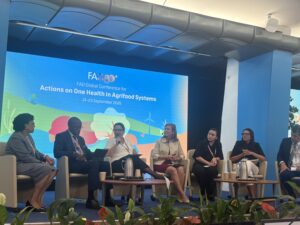
IPIFF (International Platform of Insects for Food and Feed) was proud to participate in the FAO Global Conference for Actions on One Health in Agrifood Systems held in Rome this week, where our President, Adriana Casillas took the stage to address a fundamental question:
Why do quality and safety standards matter for the insect sector, from a One Health perspective?
The answer lies in the interconnectedness of our health systems. As the Quadripartite (FAO, World Health Organization, @WOAH, United Nations Environment Programme Finance Initiative (UNEP FI)) reminded us, the health of humans, animals, plants, and ecosystems is inseparable. For the insect sector, this isn’t just a philosophy—it is our operational reality.
- Safety is the foundation of circularity: The insect sector’s core value proposition is upcycling organic materials into high-quality protein. Standards ensure that the circular economy we are building is a clean one.
- The European Model: The EU has not created a parallel regulatory regime for insects. Instead, insect production is integrated into existing food safety law, grounded in robust science. EFSA’s 2015 risk assessment is a scientific basis that allows our sector to innovate safely.
- From Law to Practice: Legislation alone doesn’t produce safe food. The IPIFF Guide on Good Hygiene Practices—formally recognised by the European Commission—translates legal requirements into daily operational guidance. This industry-led tool is now attracting interest from all corners of the world.
The path forward requires standards that are scientifically grounded, legally integrated, and practically implementable. The insect sector has immense potential to contribute to sustainable food systems, but that potential is only be realised with the trust of consumers and regulators.
III. IPIFF Highlights Insect Sector’s Role as Barcelona Conference Maps the Future of Animal Nutrition
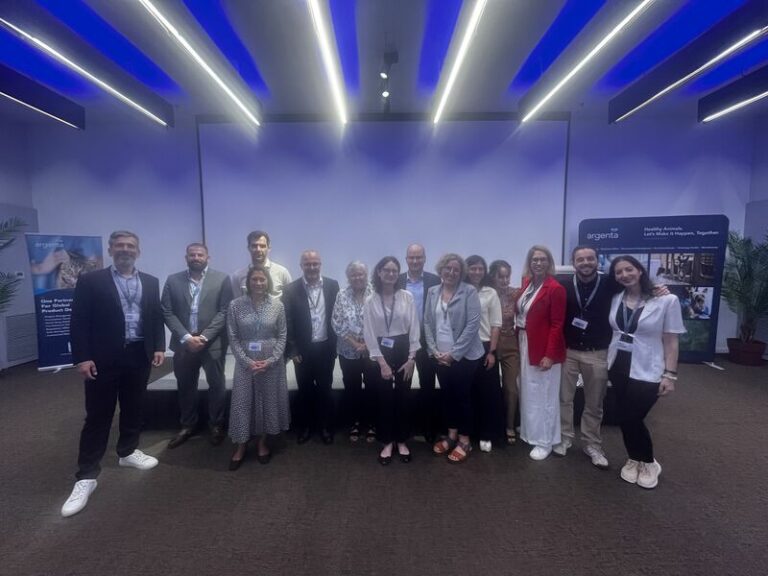
As the feed and food industry confronts a rapidly shifting regulatory landscape, the International Platform of Insects for Food and Feed (IPIFF) took centre stage at Argenta’s Navigating the Feed & Food Regulatory Landscape conference in Barcelona, underscoring the insect sector’s growing contribution to sustainable animal nutrition.
Held on 29–30 September in Barcelona, the two-day event brought together more than 100 regulators, scientists, trade association representatives, and industry leaders to dissect the legislative developments shaping market access for feed and food innovation. IPIFF participated as both a speaker and an event collaborator, joining a programme that balanced high-level policy updates with practical guidance for bringing novel products to market.
Against this backdrop of regulatory evolution, IPIFF’s presentation focused on the insect sector’s development and its capacity to deliver sustainable protein for animal feed. Steven Barbosa of IPIFF outlined the progress made in scaling insect-based ingredients and the regulatory pathways that will determine how quickly the sector can expand.
IPIFF’s participation was part of a broader strategic partnership with Argenta announced earlier in the year, aimed at accelerating the approval and adoption of insect-based animal nutrition solutions. The collaboration reflects a shared recognition that bringing novel ingredients to market requires close cooperation between producers, regulators, and scientific experts.
The conference also showcased other pioneering applications defining the future of animal nutrition: GlasPort Bio presented its work on methane reduction from ruminants, Nestlé Purina PetCare Europe discussed stress resilience solutions for pets, and Meatly shared its experience navigating the UK regulatory pathway for cultivated pet food.
IV. IPIFF ANNUAL EVENT AND GENERAL ASSEMBLY
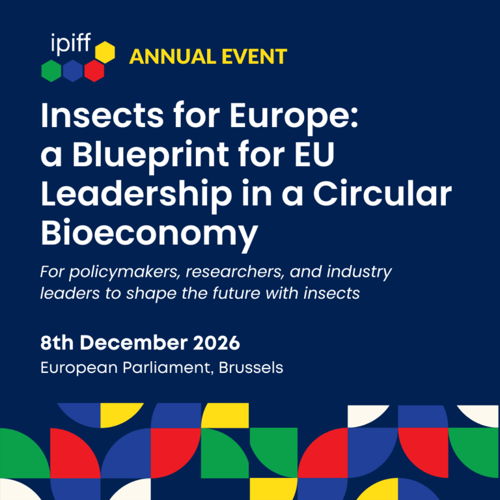
From Waste to Wealth: Why Insects are the Missing Link in Europe’s Circular Bioeconomy
Date: 8 December 2026 | Location: European Parliament, Brussels
Europe stands at a critical juncture. As we strive for strategic autonomy in food and feed, and race to meet ambitious Green Deal targets, we must ask ourselves: are we fully utilising every resource at our disposal? The answer lies in one of nature’s most efficient converters: insects.
On 8 December 2026, the International Platform of Insects for Food and Feed (IPIFF), in partnership with The Parliament, will host a landmark event at the European Parliament: “Insects for Europe: A Blueprint for EU Leadership in a Circular Bioeconomy.”
Co-hosted by MEP Paulo Nascimento Cabral (EPP, Portugal), MEP Sakis Arnaoutoglou (S&D, Greece) and Vytenis Povilas Andriukaitis (S&D, Lithuania), and this high-level gathering will bring together policymakers, industry leaders, and scientific experts to move beyond discussion and into actionable policy.
A World-Class Lineup
We are honoured to confirm a distinguished panel of speakers who represent the entire value chain—from regulation and research to aquaculture and finance.
The Policy & Regulatory Voice:
- Vytenis Povilas Andriukaitis (Member of the European Parliament)
- Paulo do Nascimento Cabral (Member of the European Parliament)
- Sakis Arnaoutglou (Member of the European Parliament)
- Peter Wehrheim (Head of Unit, Bioeconomy & Food systems, DG RTD, European Commission)
- Laurence Bonafos (DG Agriculture and Rural Development, European Commission)
- Lorella de la Cruz Iglesias (DG MARE, European Commission)
Industry & Market Experts:
- Dr Brett Glencross (IFFO)
- Anton van den Brink (FEFAC)
- Javier Ojeda Gonzalez-Posada (FEAP)
- Katherine Bryar (AquaSpark)
- Leif Kjetil Skjæveland (Nutreco)
- Laura Payo Lewis (Argenta)
Science & Global Perspective:
- Daniela Battaglia (FAO)
- Ana Sofia Santos (Animal Task Force)
- Geoffrey Knott (UKEIA)
Join the Conversation
This is a unique opportunity to engage with the architects of Europe’s bioeconomy strategy. Whether you are involved in waste management, aquaculture, livestock feed, or policy-making, the decisions discussed on December 8th will impact your sector.
Event Details:
- Date: 8th December 2026
- Location: European Parliament, Brussels
Registration is now open. Secure your place to help shape the blueprint for EU leadership in the circular bioeconomy.
➡️ Learn more and register here: https://ipiff.org/event-insects-for-europe-a-blueprint-for-eu-leadership-in-a-circular-bioeconomy/