I.Policy Work
Driving Change towards an Aquaculture Policy that Acknowledges and Supports the Uptake Of Insect Meal
IPIFF Position Paper | EU Vision for Aquaculture and Fisheries 2040
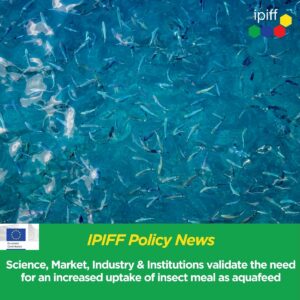
URGENT EU ACTION IS NEEDED: SCIENCE, MARKET, INDUSTRY AND INSTITUTIONS BACK THE NEED FOR MEASURES TO INCREASE THE UPTAKE OF INSECT MEAL AS AQUAFEED
A newly released paper published by IPIFF, the International Platform of Insects for Food and Feed present a strong, evidence-based case for the integration of insect meal as a cornerstone of a sustainable, competitive, and resilient European aquaculture sector by 2040. Backed by extensive scientific research, market data, and institutional validation, the paper outlines clear and actionable recommendations for policymakers to accelerate the adoption of this innovative feed solution.
Insect meal offers an EU made, domestically produced, circular and reliable alternative that can significantly reduce this dependency while strengthening food system resilience.
Strong Market Momentum
The arguments of this paper are contextualized by recent major market analyses, including the 2025 World Bank Report: Harnessing the Waters- A Trillion Dollar Investment Opportunity in Sustainable Aquaculture highlighting an exponential growth in alternative feeds like insect meal, and the 2025 Global Aqua Feed Market Outlook market confirming a clear industry shift toward sustainable, insect-based proteins to meet rising global demand and address raw material price volatility.
The largest worldwide aquafeed producers (Biomar; Skretting) have publicly demonstrated their commitment towards investment in insect meal to improve the competitiveness and sustainability of their production while enhancing their resilience.
Strong Institutional Validation
This document recalls recommendations from EU institutions such as the European Commission, the European Parliament or the European Court of Auditors, which validate and strengthens the recommendations set forward in this document.
Key Policy Recommendations
To address these barriers and unlock the sector’s full potential, the paper calls for a comprehensive policy response centred on four priorities:
- Establish a Level Playing Field
- Reform the Regulatory Framework
- Support Innovation, Scale-Up, and Transparency
- Ensure that Aquaculture contributes to Food Security
Please consult the IPIFF Position Paper, here.
Please consult the Scientific Bibliography, here.
An EU Strategy For Coastal Communities
Unlocking the Potential of Insects for Resilient EU Coastal Communities
IPIFF Position Paper | EU Strategy for Coastal Communities
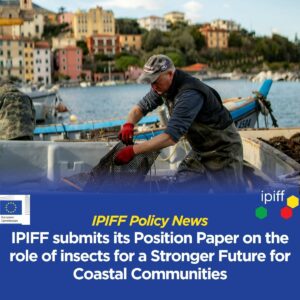
In response to the European Commission’s Call for Evidence on an EU Strategy for Coastal Communities, IPIFF has submitted a position paper outlining how the insect sector can drive sustainable growth, resilience, and innovation in coastal regions across Europe.
Why Insects Matter for Coastal Economies
- A new, year-round income source for fishers and coastal entrepreneurs.
- Reduced pressure on marine resources by diversifying livelihoods.
- Local production of sustainable aquafeed, cutting feed costs that can reach up to 70% of aquaculture expenses.
- Strong circular economy alignment using local organic by-products.
Six Policy Recommendations
- Recognise insect production as a strategic coastal activity: integrate insect farming into the EU blue economy and ensure eligibility under EMFAF, CAP, and ERDF.
- Promote integrated local value chains: support circular hubs converting local by-products into high-value insect protein.
- Enhance access to finance: develop tailored financial tools for startups and industrial-scale facilities in coastal and rural areas.
- Invest in skills, jobs, and inclusivity: fund training targeting fishers, youth, and women.
- Drive demand for sustainable aquafeed: introduce progressive EU targets for alternative protein inclusion.
- Remove regulatory bottlenecks: accelerate approvals for circular feed substrates and harmonise frass standards.
Please consult the IPIFF Position Paper, here.
Insects and CAP: Mid-Term Evaluation and Post-2027
IPIFF Position Paper | Common Agricultural Policy
IPIFF outlines a clear case for treating insect farming as a strategic, sustainable, and inclusive pillar of the EU’s Common Agricultural Policy (CAP), now and beyond 2027. This concise update highlights what’s new, why it matters, and how stakeholders can get involved.
The vision: IPIFF’s core position (in a nutshell)
- Insects as a legitimate farming activity, integrated into CSPs with regional implementation.
- Regional empowerment: Regions co-design CSP components to fit local agrifood systems.
- EU-added value: Promote protein diversification, circularity, and rural livelihoods, while respecting subsidiarity.
- Regulation alignment: Modernise organic, fertilisers, and feed rules to reflect insect realities, with safety at the forefront.
- Market access: Use procurement, marketing standards, and labelling to build demand for EU-produced insect products.
- Financing mix: CAP funding plus Horizon Europe and public-private finance to de-risk investments and scale markets
- Data-driven approach: Integrate insect indicators into the CAP framework to monitor impact.
Please consult the IPIFF Position Paper, here.
Sustainable Agriculture| Organic Farming
IPIFF Position Paper | EU Organic Regulation Review
As the EU works to update its organic production rules, a critical opportunity has emerged: integrating insect farming into the organic system. An IPIFF position paper outlines both the sector’s potential and the regulatory barriers that continue to limit its development.
The Regulatory Gap
Despite the clear advantages of insect-derived products — high nutritional value, circular economy alignment, and reduced import reliance — the sector remains constrained by two major gaps: the absence of EU organic certification standards for insect production, and the lack of transitional measures allowing insect-based feed in organic systems.
Three Immediate Policy Priorities
- Finalize EU organic standards for insect production: enabling market access, consumer confidence, and sector growth.
- Introduce temporary derogations for aquaculture feed: allowing non-organic insects to address immediate protein shortages.
- Extend derogations to organic poultry feed: increasingly urgent as existing allowances for conventional protein inputs expire in 2026.
Please consult the IPIFF Position Paper, here.
A Holistic Reset for the EU Bioeconomy — Put Insects on the Map
IPIFF Reaction Paper | EU Bioeconomy Strategy
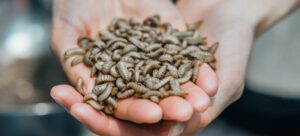
A new IPIFF position paper argues that the EU’s current study on biomass and precision fermentation is too narrow. To truly advance the bioeconomy, Europe must embrace insect farming as a scalable, circular, and commercially viable partner to fermentation technologies.
Evidence from recent policy reports
- Bellona (2026): Regulatory barriers are the main obstacle; abundant, untapped bioresources exist today (over 40 million tonnes of mixed food waste not used in feed), and a biomass hierarchy should prioritise high-value uses.
- Environment Agency (2025): Insect farming is a high-efficiency route for turning food waste into protein; it provides a practical blueprint to scale the sector, with actionable policy recommendations:
- Increase R&D and de-risk deployment (EU funding, pilots).
- Harmonise regulations for insect proteins in animal feed.
- Create market demand (incentives, Green Public Procurement criteria).Improve feedstock quality and supply (separate collection of bio-waste).
- Address end-of-waste criteria to facilitate cross-border trade and market entry.
Policy recommendations: from narrow assessment to a holistic strategy
- Broaden the Study’s scope to include the EU insect protein sector, with
- Adopt a portfolio approach in policy.
- Establish a Biomass Value Hierarchy.
- Leverage synergies and remove barriers.
- Practical steps to scale now.
Please consult the IPIFF Reaction Paper, here.
II. Your Contribution is Important
European Commission survey on finance in the Aquaculture sector
We invite you to participate in this short survey on access to finance in the aquaculture sector. This questionnaire is part of a study commissioned by the European Commission (DG MARE) to support the preparation of a background paper on “Attracting investments for aquaculture – competitive and sustainable production growth.”
The study aims to better understand:
- the main barriers aquaculture producers face in accessing finance
- the types of financing currently used and needed
- and the conditions required to attract more private investment into the sector.
Your input will help identify practical solutions and inform future policy and investment approaches at EU level.
The survey should take 10–15 minutes to complete. All responses will be treated confidentially and analysed in an aggregated form only.
The deadline for completing this survey is April 26th, 2026.
DEADLINE: 26 April 2026 — Please submit your answers directly via the EC survey link and return the completed document to the IPIFF Secretariat so that we can consolidate member responses and compile a sector report on your behalf.
The answers compiled on behalf of IPIFF members will enrich the already developed work on scientific, market and institutional validation of the role of insect meal in aquaculture. This compiled data to showcase the European Commission that sustainable aquafeed producers need specific and targeted support measures.
Please reply to the European Commission survey, here >
Please share your answers to the survey with IPIFF, by returning the filled form.
Shape the Future of European Insect Sector: Participate in the Critical 2026 IPIFF Industry Survey!
The European insect sector is no longer an emerging concept—we are in the midst of a rapid upscaling and commercial consolidation phase. Our progress is being watched by investors, policymakers, and value chain partners across the globe. To ensure our collective voice is heard clearly and backed by the most compelling evidence, we must speak with one voice, supported by the most current and robust data.
This is why the IPIFF Secretariat is thrilled to announce the relaunch of our flagship Industry Data Survey, now supercharged by the participation of the 50+ member companies of the UK Edible Insect Association. This unprecedented collaboration marks a significant step forward in the representativeness and impact of our advocacy work.
Why Your Participation Matters Now More Than Ever
The information you provide will be the bedrock of our upcoming advocacy toolkit, designed to support your business and the entire sector.
This updated brochure, scheduled for publication in May 2025, will be an indispensable tool for your own outreach to investors, commercial prospects, and media.
PARTICIPATE IN THE SURVEY NOW >
III. Sector Relations
IPIFF and FEDIAF Strengthen Partnership to Advance Insect-Based Pet Nutrition
April 2026 | Sector Relations
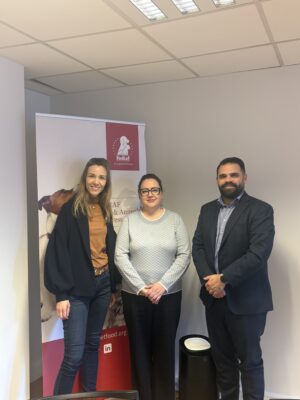
IPIFF President Adriana Casillas and Secretary-General Steven Barbosa held a high-level meeting with Milica Jevtic (Secretary-General) and Franco Garbelotto (Deputy Secretary-General) of FEDIAF — the European trade body representing the pet food industry. The meeting reinforced both organisations’ shared commitment to mainstreaming insect-based ingredients in European pet nutrition.
Key Outcomes
- Reinforced collaboration: both parties reaffirmed their longstanding partnership to bring the best insect-based ingredients to pet food producers across Europe.
- Direct industry engagement: IPIFF was invited to present insect ingredients directly to pet food producers, enabling focused dialogue on technical priorities and market readiness.
- Concrete next steps: the two organisations exchanged actionable ideas on how insect proteins can meet the evolving needs of the pet food industry.
Looking Ahead
IPIFF has officially invited FEDIAF to speak at its Annual Event to take place in December in the European Parliament. Both organizations are also collaborating within the Circular Feed Platform as circular economy and bioeconomy take center stage in EU policy.
IPIFF and EABA are working to revamp a Joint Policy Roadmap
IPIFF and EABA, the European Algae Biomass Association (EABA), have announced the initiative to revamp a Joint Policy Roadmap for the algae and insect sectors.
IPIFF and EABA agreed to co-develop a refreshed, cross-sector joint policy roadmap for the insect and algae sectors. Focus areas include sustainability metrics, regulatory clarity, funding opportunities, market-access pathways, and scientific collaboration.
The cooperation aims to streamline advocacy efforts and present a unified sector voice to policymakers in Europe. The Roadmap, especially addressing key policy dossiers such as the Bioeconomy Strategy, Aquaculture and Fisheries Policy or the Protein Diversification Strategy.
IPIFF engages with Aquaculture Producers: Advocating an EU Sustainable Aquaculture Sector
A joint dialogue with the Federation of Aquaculture Producers is taking place. FEAP and IPIFF are working together towards the promotion of a Sustainable and Competitive EU Aquaculture Sector, that acknowledges the role of insects as aquafeed.
Aside from a meeting in Brussels between the two organizations’ Secretary-Generals, the federation has already confirmed its attendance at IPIFF’s Annual Event in the European Parliament, signaling strong support for collaborative policy engagement.
IV. Internal Work
Task Force On Non-compliant Insect Products in the EU Market-ensuring a Level Playing Field for EU Insect Producers

Following our online meeting on the 10th of March with representatives of the European Commission, we are writing to provide a clear update on the action points discussed and to outline the next crucial steps in safeguarding our industry’s integrity.
A new internal meeting was held with representatives of Insect companies who have compiled evidence of the existence of non-compliant insect products.
The Mission of the Task Force
This initiative brings together IPIFF members who have been compiling evidence of non-compliant insect products and submission of complaints to the respective national authorities.
IPIFF is to broaden the collection of evidence, by reaching out to other IPIFF Members and to enlarge the list of complaints submitted by insect operators to their respective national authorities.
Step 1: Compiled Evidence (Led by IPIFF Members)
Members already presented and compiled evidence such as a list of existing non-compliant products, companies and testimonies, or reporting of the lack of proper boarder control checks.
Step 2: Report to National Authorities (Led by National Associations)
Different members have also addressed their national competent authorities, calling their attention for the need of enforcement of proper boarder checks and ensure compliance with applicable legislation.
Step 3: Escalate to the European Commission (Led by IPIFF)
IPIFF is now preparing a Guide to support members in compiling evidence and to report to their respective national authorities. This, to broaden the number of evidence and number of complaints submitted by insect operators in different EU Member States, which will enable IPIFF to take action at the EU level.
Task Force Communication

What’s being delivered (Actionable items by area)
Updates on Ongoing Work
Internal Communications & Knowledge Sharing
- Bi-Weekly updates
- Design improvements: Social media templates
- Website design (Ongoing Work)
- Revamp of the Members Area (Ongoing Work)
- Industry News (Ongoing Work)
- Members have expressed the interest of IPIFF launching a section in its website dedicated to industry news
- IPIFF started this line of content in social media and will now launch regular calls to all members to share their company news, as to project industry positive signs by the sector.
- Members have expressed the interest of IPIFF launching a section in its website dedicated to industry news
- Knowledge Sharing Platform (Ongoing Work)
- Consultation to the different IPIFF Academic members is ongoing to shape the form of academic input to the IPIFF Policy Work, identify key research areas being conducted by the different academic members, while at the same time ensuring a closer cooperation between academia and industry members.
- The IPIFF General Assembly in Turin will enable a moment to B2B meetings between academia and industry members.
- A section of the IPIFF website to be dedicated to Scientific and Academic Knowledge Sharing
- Consultation to the different IPIFF Academic members is ongoing to shape the form of academic input to the IPIFF Policy Work, identify key research areas being conducted by the different academic members, while at the same time ensuring a closer cooperation between academia and industry members.
Media Partnerships & Outreach
- Media database & member contacts: Ongoing collection & engagement based on shared contacts and databases by members such as Innovafeed.
- Media collaborations- soon to be published: Alternative Proteins, Aquaculture International, Feed & Additives Magazine, Innovation News Platform and Feed Planet.
- IPIFF will share very shortly key takeaways from its IPIFF Communication Task Force where all media published articles will be shared.
Outreach, Partnerships & Global Engagement
- Global partnerships
- Strengthen ties with China, Turkey, UK, Brazil
- Strategic alliances
- IPIFF is on ongoing discussions with the key market leaders for insect products to support the sector’s advocacy and policy endeavours
- These include: Argenta, Biomar or Skretting
- IPIFF is on ongoing discussions with the key market leaders for insect products to support the sector’s advocacy and policy endeavours
Crisis Communication Management
Cooperation between members and research provided by Innovafeed on existing organizations lobbying against our sector.
A comprehensive research developed by our member company Innovafeed’s Communication Manager, Nadege Audiffren, will enable our sector to take strategic steps in the short term.
LCA Concept Note
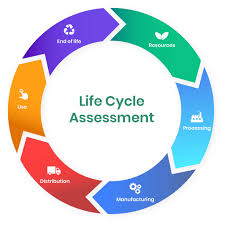
This document was prepared by IPIFF based on data provided by its member companies—which include the EU leading insect production firms—as well as input from its academic network, bringing together some of the world’s most recognised universities and research centers in entomology.
In addition to develop this document, IPIFF consulted highly renowned specialists in entomology and Life Cycle Assessment (LCA) development, including Professor Dr Sergiy Smetana and Professor Dr Seyyed Hassan.
Finally, this document is accompanied by seven third-party-assessed LCAs from IPIFF member companies, as well as a comprehensive scientific bibliography. Together, they help clarify the key contextual factors needed to accurately interpret the industry’s rapidly improving environmental profile and its future potential.
This document is organized into three sections:
- The first section revisits the scientific rationale driving the growing interest in insect-derived nutrients and explores the potential role of insects in future food and feed systems.
- The second provides an up-to-date assessment of environmental performance across different production models, based on multi-year operational data from industrial-scale facilities.
- The third examines key methodological considerations for developing a more consistent industry-wide life cycle assessment (LCA) framework and outlines the essential steps to enhance comparability and transparency across the sector.
While the designing of the document is being finalized, IPIFF members can access the finalized document, here.
V. IPIFF & Industry Events

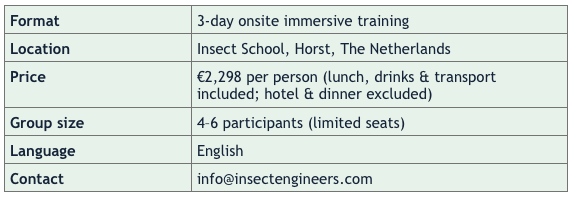
The 3-day onsite programme is designed by industry experts and combines technical lectures, hands-on practice, and real-world field visits. It is aimed at entrepreneurs, agri-food professionals, and anyone looking to start or scale a BSF farming operation with confidence.
Groups are intentionally kept small — 4 to 6 participants per session — to ensure personalised attention and direct mentoring from experienced practitioners.
Upcoming Dates
- 28–30 April 2026
- 19–21 May 2026 — fully booked
- 30 June – 2 July 2026
- 29 September – 1 October 2026
- 27–29 October 2026 — fully booked
- 24–26 November 2026
What to Expect on Site
- Engaging lectures: BSF biology, feed optimisation, rearing techniques, climate control, and business development.
- Hands-on activities: practical experience with rearing, sieving, and state-of-the-art breeding systems.
- Field trips: visits to real-world waste handling and commercial BSF operations.
- Expert guidance: one-on-one support from seasoned professionals.
For further information, contact: info@insectengineers.com
Save The Date | Events
Join Us in Turin: IPIFF General Assembly & IFW 2026
June 2026 | Turin, Italy
The countdown is on. This June, the global insect sector gathers in Turin for two landmark events that will shape the future of insect-based food and feed. IPIFF warmly encourages all members to secure their place and be part of these important moments for our community.
IPIFF General Assembly — Members Only
The IPIFF General Assembly provides a dedicated forum for members to exchange insights and sector updates, discuss strategic priorities, and contribute to shaping the future direction of the organisation. This exclusive meeting remains a cornerstone for strengthening collaboration within the IPIFF network.
Registration deadline: 15 May 2026
📅 June 8, 2026, from 14h00 to 17h30, followed by a B2B event between Industry & Academic Members and Joint Dinner.
🏢 Hilton Double Tree Hotel, located within the same Lingotto complex that hosts the IFW conference, in Turin
➡️ Register here to attend the IPIFF Physical General Assembly on the 8th of June in Turin.
IFW 2026 — Insects to Feed the World
IFW 2026 is the leading global event focused on insects as a sustainable solution for food and feed. Participants will include researchers and academic experts, industry leaders and entrepreneurs, and policymakers and institutional representatives — all working together to explore innovations, challenges, and opportunities shaping the future of insect-based production systems.
Early bird registration ends: 22 May 2026 | www.ifw2026.org
📅 June 9–12, 2026
🏢 Lingotto Conference Center
➡️ Register here to attend the Insects to Feed the World Conference. IPIFF Members enjoy an extended early bird fee until the 22nd of May.
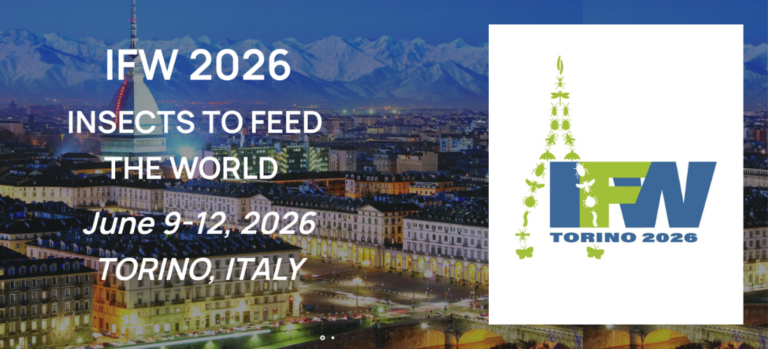
Sponsorship Opportunities
IPIFF invites organisations to participate as sponsors and gain visibility on an international stage. Benefits include enhanced exposure to a global, high-level audience, direct engagement with stakeholders across the value chain, and positioning as a leader in sustainable food innovation.
Explore sponsorship opportunities: www.ifw2026.org
IPIFF Annual Event in the European Parliament:
Mark Your Calendars!
We are delighted to announce that planning is now well underway for IPIFF’s flagship Annual Event, which will take place on 8-9 December in the heart of European decision-making: the European Parliament.
This year’s edition is titled “Insects for Europe: A blueprint for EU leadership in the Circular Bioeconomy – from Farm to Sea.” It promises to be a landmark occasion to showcase the insect farming sector’s pivotal role in advancing sustainable food systems, circularity, and innovation across the EU.
More updates to be provided very soon! Stay Tunned!
Mark Your Calendars
We kindly ask you to reserve both 8 and 9 December in your calendars:
- 8 December: IPIFF General Assembly Meeting (location and details to follow).
- 9 December: IPIFF Annual Event at the European Parliament.
Behind the Scenes
IPIFF is working closely with the Parliament Magazine and the European Parliament to deliver the best event ever! IPIFF is supported by Event and Content Managers.
Who’s already confirmed?
Already confirmed speakers include representatives of Argenta, EU Federation of Aquaculture Producers, FEFAC, Biomar, German Agricultural Society and Members of the European Parliament taking part of the Committees on Agriculture & Rural Development and Fisheries.
Stay Tuned
Further details—including the full programme, registration information, sponsorship opportunities and logistical notes—will follow in the coming weeks. We look forward to gathering with you in Brussels for what promises to be an inspiring and impactful moment for our sector.
What’s in the next Edition?
- IPIFF Policy Work
- EU Industrial Accelerator Act
- EU Biotech Act
- EU Livestock Strategy
- EU Food and Feed Simplification Omnibus
- Policy Meetings
- IPIFF meets the President of the Bio-Industries Consortium